



The Shift from Projectors to Interactive Displays
Education is undergoing a quiet but profound transformation. In classrooms around the world, traditional projectors are steadily being replaced by interactive displays that combine the functions of a whiteboard, touchscreen, and digital collaboration hub in a single device.
According to Futuresource Consulting (2025), more than 60% of new classroom technology installations in North America now favor interactive displays over projectors, with engagement, maintenance reduction, and hybrid learning capabilities cited as primary reasons.
The change is driven not by novelty, but by necessity. Teachers, administrators, and IT managers are seeking solutions that solve real problems: poor visibility, shadow interference, high maintenance costs, and limited interactivity. Interactive displays answer these needs while laying the foundation for future-ready classrooms.
👉 Interactive Display Buying Guide

Why Projectors Are Becoming Obsolete
Projectors once dominated classrooms, but technological and pedagogical demands have evolved. Teachers are increasingly frustrated by their limitations, which include:
Brightness and Visibility: Projectors struggle in classrooms with natural lighting. A survey conducted by IDC EdTech (2024) revealed that 78% of teachers experience low visibility during daytime lessons. This affects student comprehension and overall engagement. Interactive displays, in contrast, offer consistent 4K brightness across the entire screen, ensuring that even students at the back of the room can see content clearly.
Shadow and Interaction Limitations: When using a projector, standing in front of the screen often blocks content. This makes collaborative lessons cumbersome. Interactive displays eliminate shadows entirely and support multi-touch interaction, allowing both teachers and students to annotate and interact simultaneously.
High Maintenance Costs: Projector lamps cost between $100 and $300 each and must be replaced every 2–3 years. Filters require cleaning, and recalibration is frequent. A case study of a US K-12 school district found that switching to interactive displays reduced IT maintenance requests by 30%, freeing staff to focus on educational priorities rather than equipment troubleshooting.
Limited Engagement and Interactivity: Modern pedagogy emphasizes active participation and collaboration. Projectors are largely passive tools, incapable of supporting multi-user interaction, digital annotation, or hybrid learning—the very skills schools aim to cultivate.
For schools looking to upgrade their classroom technology, the Interactive Whiteboard Software Guide offers detailed insights into software that complements interactive displays.

Interactive Displays: The Modern Classroom Solution
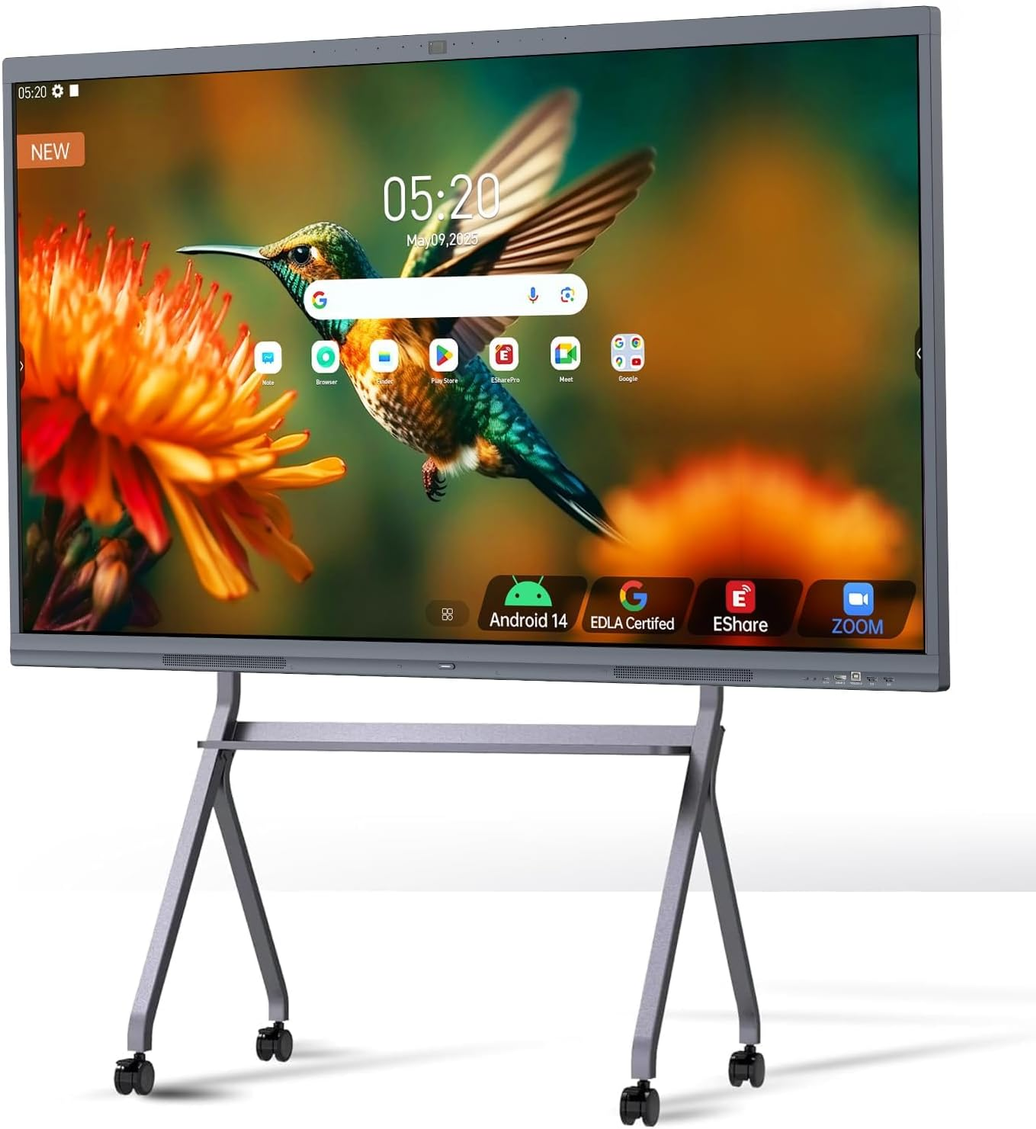
Interactive displays merge multiple classroom tools into one integrated system. They combine a touchscreen, digital whiteboard, wireless sharing, and computing platform in a single panel. Teachers can write directly on the screen, display multimedia content, annotate in real time, and connect with remote students—all without additional hardware.
This integration not only simplifies classroom technology but also enhances student learning outcomes. Multi-touch capabilities allow group activities and collaborative projects, while cloud-connected platforms make it easy to share and save lesson content.

Real-World Evidence of Success
US K-12 School District Implementation
In a large K-12 district in the Midwest, 300 classrooms replaced projectors with 65–75 inch interactive displays. Teachers reported significant improvements in lesson delivery, particularly for hybrid sessions where some students participated remotely. The district observed a 42% increase in student engagement and a 30% decrease in IT support requests, demonstrating both educational and operational benefits.
European University Lecture Halls
A European university deployed 86-inch interactive displays across all major lecture halls. Hybrid lecture participation increased noticeably, and professors noted that students were more willing to ask questions and engage in real-time problem-solving. The university’s IT department reported a 25% reduction in support tickets for display-related issues.
Corporate and Training Environments
Beyond schools and universities, corporate training centers have also adopted interactive displays. In a multi-location rollout for workshops and onboarding sessions, training managers noted faster collaboration, better visual demonstrations, and smoother hybrid participation. Multi-team brainstorming became more efficient thanks to the built-in digital whiteboard.

Technical Advantages Compared to Projectors
Interactive displays offer tangible advantages that go beyond simple brightness and touch capabilities:
Direct-View LED Panels: No projection distance limits. Brightness is uniform, and images remain sharp across the entire screen.
Multi-Touch Capacitive Systems: Multiple students can interact simultaneously. The system recognizes handwriting, gestures, and touch combinations, supporting collaborative learning.
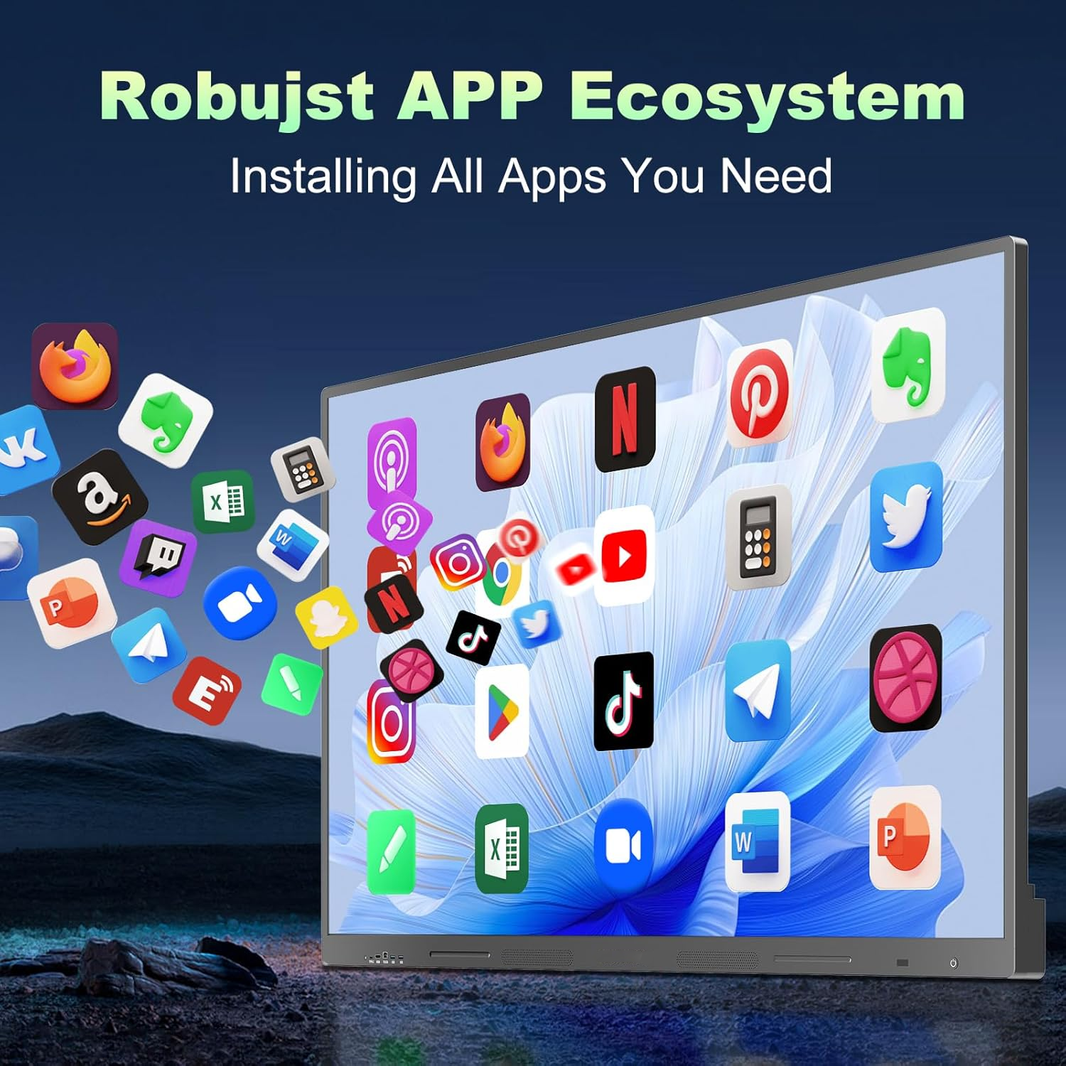
Embedded Computing Systems: Built-in Android or OPS Windows modules allow teachers to run learning management software, video conferencing, and cloud applications directly on the display without additional devices.
For a deeper comparison, see OPS vs Android Interactive Displays

Choosing the Right Display for B2B Procurement
Selecting the correct interactive display requires a combination of technical, educational, and operational considerations.
Classroom Size and Student Count: Small classrooms are best served by 65-inch displays, standard classrooms by 75-inch panels, and large lecture halls require 86-inch or larger displays.
Software and Operating System Needs: Android systems are ideal for plug-and-play simplicity, while OPS Windows modules support full desktop software for advanced applications.
Total Cost of Ownership (TCO): Schools should evaluate not just purchase price, but also long-term maintenance costs, energy consumption, and device lifespan. Case studies show that while interactive displays have higher initial costs than projectors, they often deliver higher ROI over 5 years due to reduced maintenance and improved teaching efficiency.
Deployment and Training: Decide between wall-mounted or mobile cart installations based on classroom flexibility. Teacher training is critical to maximize interactive features, and IT network integration must support hybrid learning applications.

Risk and Deployment Considerations
Even the best interactive displays require thoughtful deployment:
- Lighting and Glare: Anti-glare technology ensures visibility in naturally lit rooms.
- Network Reliability: Adequate Wi-Fi and LAN connections are essential for smooth operation.
- Content Compatibility: Ensure that LMS and software platforms integrate seamlessly with the display.
- Classroom Layout: Consider optimal viewing angles for all students, especially in wide or irregularly shaped rooms.

Quantitative Benefits
Data from multiple implementations demonstrate clear advantages:
| Metric | Projector | Interactive Display |
|---|---|---|
| Student Engagement | Baseline | +42% |
| IT Support Requests | Baseline | -30% |
| Maintenance Costs | High | Low |
| Hybrid Learning Support | Poor | Excellent |
| ROI Over 5 Years | Moderate | High |
This table highlights why interactive displays are not just a technological upgrade—they are a strategic investment in learning outcomes and operational efficiency.

Integration With Products and Conversion
For schools considering adoption, the following products match specific classroom needs:
- 65-inch Interactive Display – Ideal for small classrooms.
- 75-inch Interactive Display – Standard classrooms and collaborative learning.
- 86-inch Interactive Display – Large classrooms and lecture halls.
Explore JOYRAY Education Solutions

Future Outlook
Interactive displays are rapidly becoming the cornerstone of modern education. Projectors, while still useful in niche applications, cannot match the versatility, interactivity, or hybrid learning support offered by flat-panel systems.
Industry forecasts suggest that by 2030, more than 80% of classrooms globally will rely on interactive flat panels as the primary teaching tool, supporting a generation of students and teachers accustomed to digital collaboration.
Conclusion
The transition from projectors to interactive displays is driven by measurable benefits: enhanced student engagement, lower operational costs, seamless hybrid learning, and future-ready classrooms.
For schools planning technology upgrades, interactive displays are no longer optional—they are essential. By carefully evaluating classroom size, software needs, and deployment strategies, schools can make informed investments that improve both teaching and learning outcomes.
Leave a comment