



The Classroom Changed Faster Than Most Schools Expected
For decades, classrooms were designed around a simple assumption:
The teacher and students would always be physically present in the same room.
That assumption no longer holds true.
Today, schools are expected to support:
- Remote students joining from home
- Hybrid university lectures
- Cloud-based assignments
- Cross-campus collaboration
- Recorded lessons
- Flexible attendance models
- Digital whiteboarding
- Real-time online participation
What began as a temporary response to global disruption has evolved into a permanent shift in educational infrastructure.
But many schools discovered a major problem during this transition:
Traditional classroom technology was never built for hybrid learning.
Projectors, static whiteboards, and disconnected conferencing systems created fragmented experiences where remote students became passive viewers rather than active participants.
This is why educational institutions worldwide are redesigning classrooms around interactive displays.
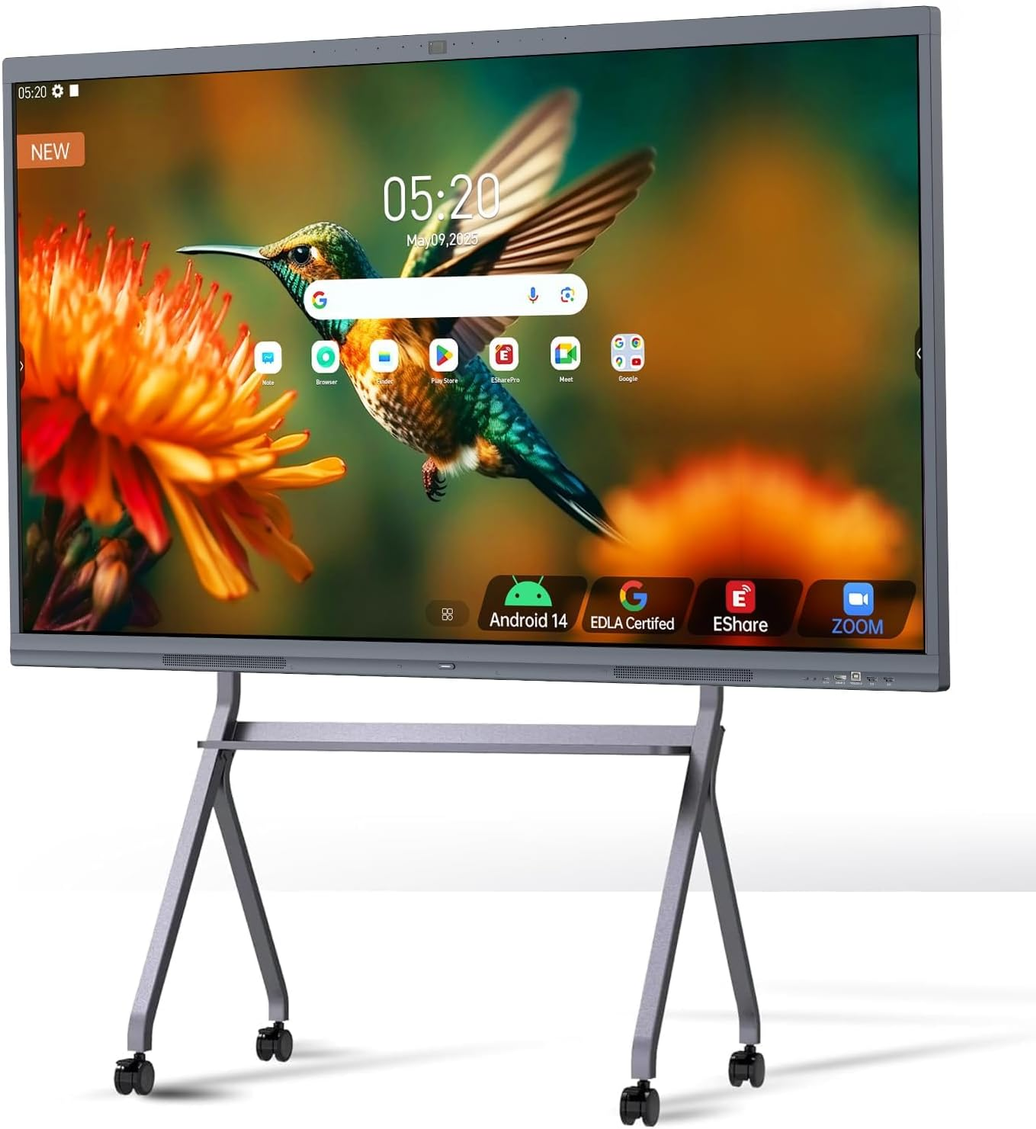
Instead of functioning as simple presentation screens, interactive displays now act as the operational center of the hybrid classroom — combining communication, collaboration, annotation, and wireless sharing into a single platform.
As explained in our Ultimate Guide to Interactive Displays for Education,schools are increasingly replacing projector-based teaching environments with interactive ecosystems designed for flexible learning.

Hybrid Learning Is No Longer “Optional Infrastructure”
One of the biggest misconceptions schools made early on was assuming hybrid learning would disappear.
Instead, hybrid teaching evolved into a long-term operational model.
Universities now offer flexible attendance options.
Training centers support remote certification programs.
K-12 schools maintain digital continuity systems.
International collaboration has become more common.
In many institutions, classrooms are no longer designed only for students physically inside the room.
They are designed for:
- Physical learners
- Remote learners
- Recorded playback
- Cloud collaboration
- Cross-device participation
This fundamentally changes how classrooms must operate technologically.
The display is no longer just “showing content.”
It is now responsible for:
- Running video conferences
- Displaying remote participants
- Supporting annotation
- Managing digital collaboration
- Sharing wireless content
- Recording lessons
- Synchronizing cloud-based materials
That is a completely different workload compared to traditional projector systems.

Why Projector-Based Hybrid Classrooms Often Fail
Many schools initially attempted to adapt older projector systems for hybrid learning.
The results were often frustrating.
Common problems included:
Poor Visibility for Remote Students
Projector brightness and camera positioning frequently make whiteboards difficult to read remotely.
Small handwritten notes disappear entirely over video calls.

Fragmented Collaboration
Teachers often juggle:
- A projector
- A laptop
- A webcam
- A separate whiteboard
- External conferencing software
This creates workflow friction that slows down teaching.

Weak Student Engagement
Remote students frequently become passive observers rather than active classroom participants.
Without collaborative tools, hybrid lessons easily become one-directional lectures.

Technical Complexity
Many classrooms evolved into temporary cable-heavy setups that were difficult for teachers to manage independently.
Schools quickly realized hybrid learning required purpose-built classroom systems rather than patched-together solutions.
This is one of the major reasons schools began transitioning away from projector-based teaching environments, as discussed in our Why Schools Are Replacing Projectors with Interactive Displays article.

The Interactive Display Becomes the Center of the Hybrid Classroom
Modern hybrid classrooms are increasingly built around a single central collaboration device:
The interactive display.
Instead of operating multiple disconnected systems, schools now consolidate classroom workflows into one integrated platform.
A hybrid-ready interactive display can simultaneously function as:
- Presentation screen
- Digital whiteboard
- Wireless collaboration hub
- Video conferencing interface
- Annotation system
- Recording platform
- Cloud collaboration device
This dramatically simplifies classroom operation.
Teachers can:
- Annotate directly during Zoom sessions
- Share student screens wirelessly
- Save lessons instantly to the cloud
- Collaborate with remote participants in real time
- Conduct hybrid brainstorming sessions
- Display multiple content sources simultaneously
The classroom becomes operationally smoother and significantly more collaborative.

Video Conferencing Is Now Classroom Infrastructure
One of the biggest shifts in education technology is that video conferencing is no longer considered an “extra tool.”
It has become core classroom infrastructure.
Hybrid classrooms now regularly rely on:
- Zoom
- Microsoft Teams
- Google Meet
- Webex
This changes the technical requirements for classroom displays.
Schools increasingly prioritize displays capable of handling:
- Multi-window workflows
- High-resolution conferencing
- Simultaneous annotation
- Low-latency touch interaction
- Stable wireless connectivity
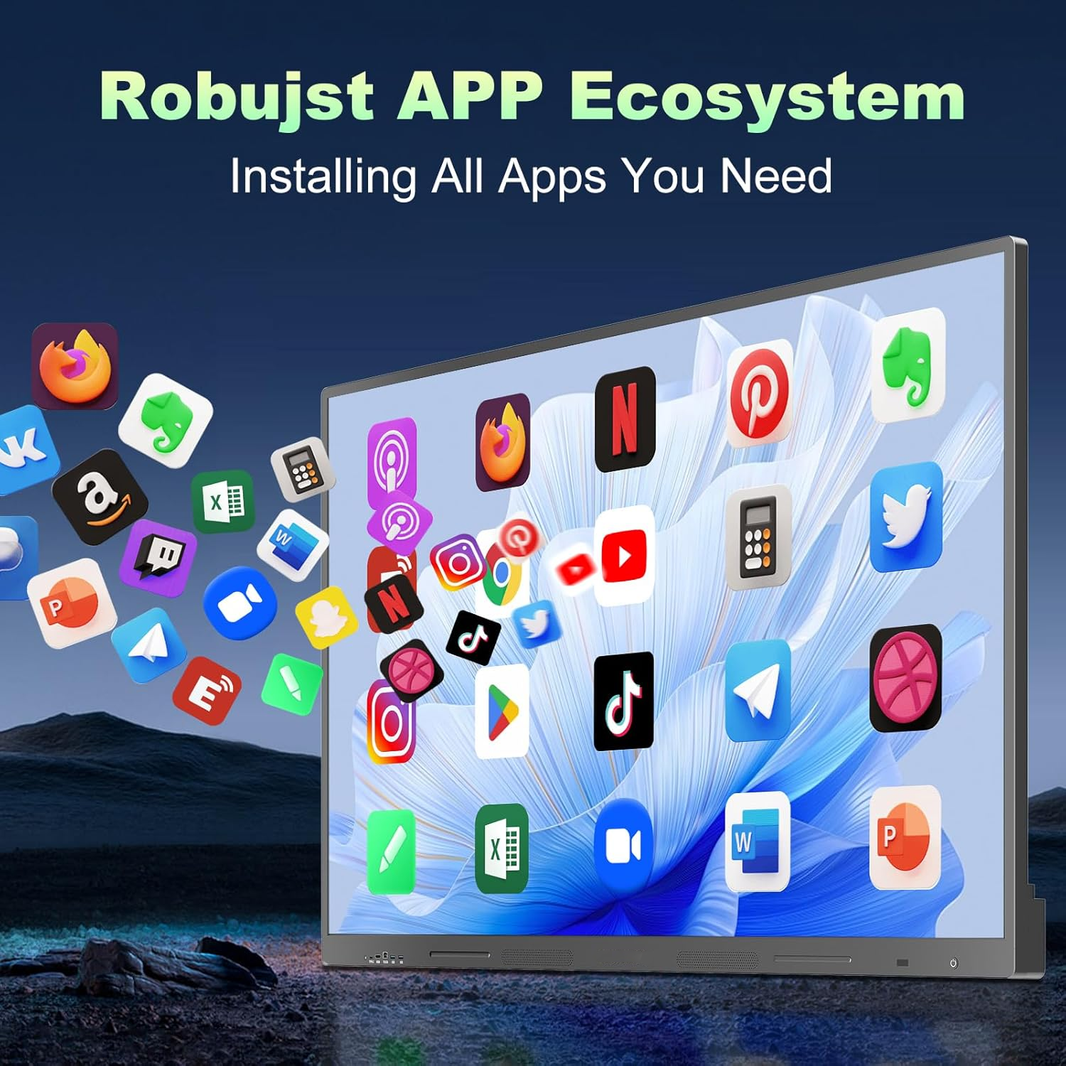
OPS PC-based interactive displays have become especially popular in higher education and technical training environments because they support full desktop conferencing platforms without software limitations.
As explored in our OPS PC vs Android Interactive Displays guide, Windows-based OPS systems provide stronger multitasking performance for hybrid classrooms running multiple collaborative applications simultaneously.

Hybrid Learning Depends on Collaboration — Not Broadcasting
A major mistake many institutions made early on was treating hybrid learning like livestreaming.
But successful hybrid education is not about broadcasting lectures.
It is about maintaining interaction across locations.
That is where interactive displays become extremely valuable.
Modern hybrid classrooms use interactive displays for:
- Multi-user annotation
- Live problem solving
- Digital brainstorming
- Real-time diagram editing
- Collaborative whiteboarding
- Remote group participation
This is especially important in STEM and technical education environments where visual collaboration matters.
For example:
An engineering professor can annotate CAD models live while remote students contribute simultaneously.
A coding instructor can debug software collaboratively with students both in-class and online.
A science teacher can run interactive simulations while students annotate results remotely.
Our Interactive Displays for STEM Education guide explains how collaborative classroom technology improves participation in technical learning environments.

Digital Whiteboarding Solves One of Hybrid Learning’s Biggest Problems
Traditional whiteboards work poorly in hybrid classrooms.
Even with high-quality cameras, handwritten notes often become difficult for remote students to follow.
Interactive displays eliminate this problem through digital whiteboarding.
Teachers can:
- Write naturally with stylus input
- Save annotations instantly
- Share notes in real time
- Synchronize lessons to cloud platforms
- Export teaching materials after class
This creates a much smoother experience for both in-person and remote students.
Schools increasingly integrate interactive displays with collaborative whiteboard ecosystems such as:
- Microsoft Whiteboard
- Google Jamboard alternatives
- Explain Everything
- OpenBoard
- Cloud-based LMS platforms
Our Interactive Whiteboard Software Guide explores how schools build collaborative software ecosystems around hybrid classroom displays.

Wireless Sharing Is Becoming Mandatory
Modern hybrid classrooms no longer operate around a single teacher device.
Students increasingly participate using:
- Tablets
- Chromebooks
- Laptops
- Smartphones
As a result, wireless sharing capabilities are becoming essential.
Interactive displays support BYOD (Bring Your Own Device) learning environments by allowing students to present content directly from personal devices without complicated cables or adapters.
This dramatically improves:
- Classroom participation
- Group collaboration
- Presentation efficiency
- Student engagement
Wireless collaboration also reduces lesson transition time, which is especially valuable in fast-paced university and training center environments.

Classroom Design Matters More Than Most Schools Realize
Installing an interactive display alone does not automatically create an effective hybrid classroom.
Successful deployments require thoughtful classroom planning.
Schools should carefully evaluate:
Camera Placement
Teachers should remain visible while naturally interacting with the display.

Audio Coverage
Remote students tolerate poor video more easily than poor audio.
Microphone placement is critical.
Screen Size Selection

Displays that are too small reduce visibility for both local and remote learners.
Many schools now standardize:
- 65-inch interactive displays for smaller classrooms
- 75-inch interactive displays for standard hybrid classrooms
- 86-inch interactive displays for lecture halls and engineering spaces
Our Best Interactive Display Sizes for Education guide explains how classroom dimensions affect visibility and engagement.

Universities Are Driving Hybrid Classroom Innovation
Higher education institutions have become some of the largest adopters of hybrid classroom technology.
Universities increasingly require:
- Lecture recording
- Remote attendance flexibility
- Cross-campus collaboration
- Digital seminar participation
- Cloud-based coursework
This has accelerated demand for enterprise-grade interactive display systems capable of supporting complex hybrid workflows.
Engineering schools, medical programs, and research departments especially benefit from interactive displays because they require collaborative visual environments rather than simple presentation systems.

The Next Phase of Hybrid Learning
Hybrid learning technology is still evolving rapidly.
Emerging trends include:
- AI-generated lesson summaries
- Real-time language translation
- Cloud-based classroom analytics
- Interactive virtual laboratories
- AI-assisted collaboration tools
- Remote STEM simulation environments
Interactive displays are likely to remain central because they combine communication, visualization, collaboration, and teaching workflows into a unified platform.
Educational institutions planning long-term digital transformation strategies increasingly view hybrid-ready classrooms as permanent infrastructure investments rather than temporary upgrades.

Hybrid learning fundamentally changed what classrooms are expected to do.
Schools are no longer designing spaces solely for in-person instruction. They are building connected learning environments capable of supporting collaboration across physical and digital spaces simultaneously.
Interactive displays have emerged as one of the most important technologies enabling this transition.
By combining video conferencing, digital whiteboarding, wireless sharing, and collaborative interaction into a single system, interactive displays help schools create hybrid classrooms that are more flexible, engaging, and future-ready.
For educational institutions planning long-term classroom modernization, hybrid-capable interactive displays are no longer optional technology upgrades — they are becoming foundational educational infrastructure.
Leave a comment