



Clarifying the Confusion
Many schools still struggle to differentiate between interactive displays and smart boards. Both promise enhanced classroom engagement, but the differences are critical when planning digital classrooms, hybrid learning environments, and long-term technology investments.
According to [EdTech Review, 2024], schools that carefully evaluated display technology saw 25–35% higher student participation when using modern interactive displays over traditional smart boards.
This guide helps B2B decision-makers understand:
- Core functional differences
- Classroom integration strategies
- ROI considerations
- Hybrid learning capabilities
And provides examples of schools that made the transition successfully.
( For a broader overview, see our Ultimate Guide to Interactive Displays for Education)

What Is a Smart Board?
A smart board is typically a touch-enabled whiteboard that integrates basic software for annotation and presentation. Core characteristics include:
- Touch interaction, often limited to 2–4 points
- Preloaded proprietary software for lesson annotation
- Often requires external PC connection
- Basic multimedia integration (images, videos)
Smart boards are useful for enhancing traditional teaching but have limitations in hybrid learning, cloud integration, and multi-user collaboration.

What Is an Interactive Display?
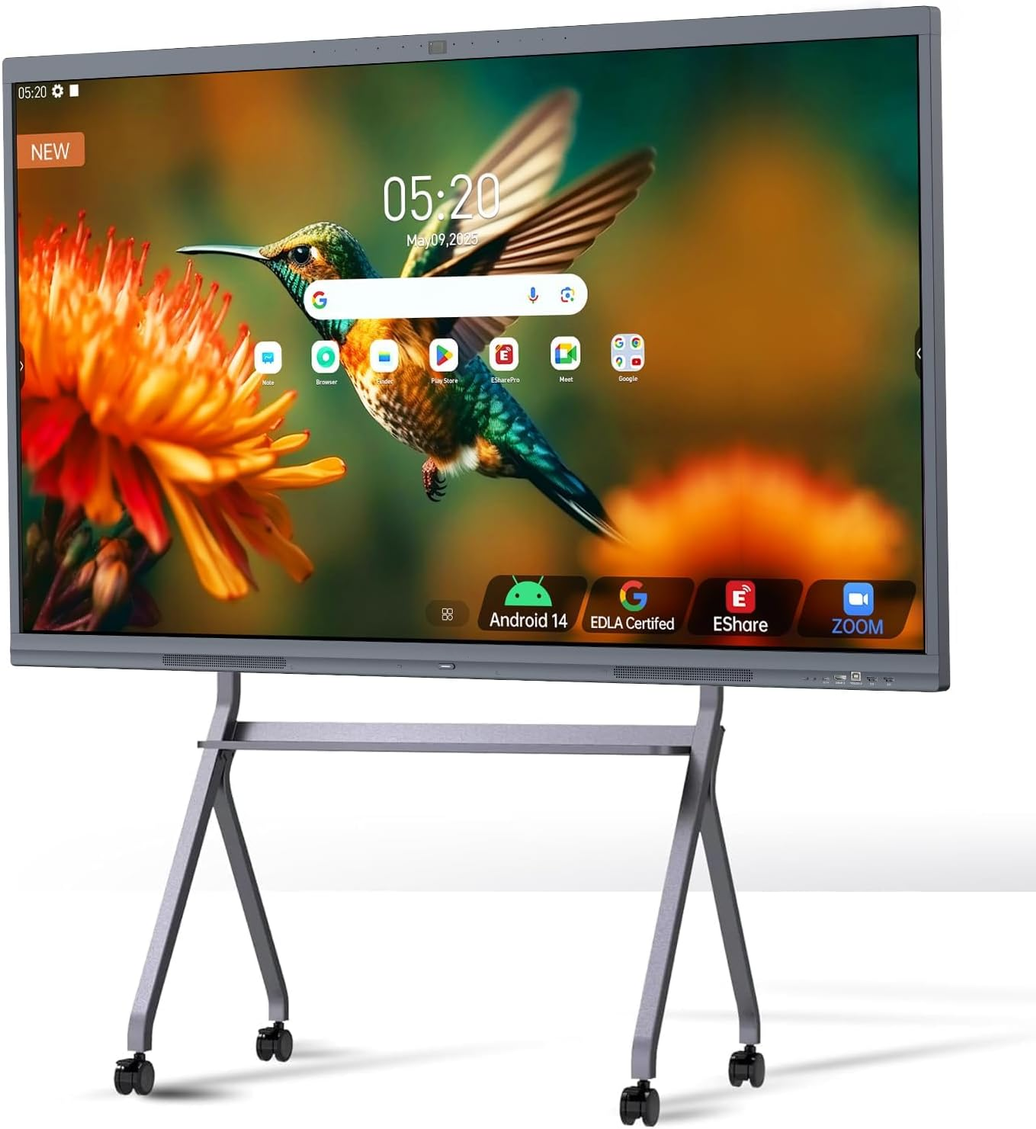
Interactive displays are essentially large touchscreen monitors designed for classrooms, combining multiple functions in a single device:
- Multi-touch digital whiteboarding (10+ touch points)
- OPS PC or Android integrated computing
- Wireless screen sharing from multiple devices
- Cloud collaboration for lesson storage and annotation
- Video conferencing integration (Zoom, Microsoft Teams, Google Meet)
Interactive displays provide the full ecosystem for modern, hybrid, and collaborative classrooms.

Key Differences: Interactive Display vs Smart Board
| Feature | Interactive Display | Smart Board |
|---|---|---|
| Multi-touch | 10+ points | 2–4 points |
| Operating System | Android / OPS PC | Usually requires external PC |
| Wireless Sharing | Yes, multi-device | Limited |
| Cloud Integration | Yes, full LMS | Often none |
| Hybrid Learning | Full support | Minimal |
| Multimedia Support | Full 4K video, images, apps | Limited |
| Long-Term ROI | High | Medium |
| Maintenance | Low | Medium |
| Software Ecosystem | Flexible, third-party apps | Mostly proprietary |
(Compare with OPS PC vs Android Interactive Displays)

Engagement & Classroom Collaboration
Interactive displays dramatically improve engagement compared to smart boards:
- Student Participation: Multiple students can write simultaneously
- Group Collaboration: Students can wirelessly share content from laptops/tablets
- Remote Learners: Annotate in real-time through cloud and video conferencing
A 2023 study by EDUCAUSE found classrooms using interactive displays saw 40% higher collaborative activity than smart board classrooms.

Hybrid Learning Capability
Smart boards often fall short in hybrid learning:
- Limited camera/audio integration
- Dependence on teacher’s PC
- Remote students mostly passive observers
Interactive displays enable:
- Integrated video conferencing (Zoom, Teams, Google Meet)
- Real-time multi-user annotation
- Wireless screen sharing for student devices
- Cloud lesson storage for asynchronous learning
Related reading: Interactive Displays for Hybrid Learning

Software & Ecosystem Flexibility
Smart boards usually come with proprietary software, limiting:
- LMS integration
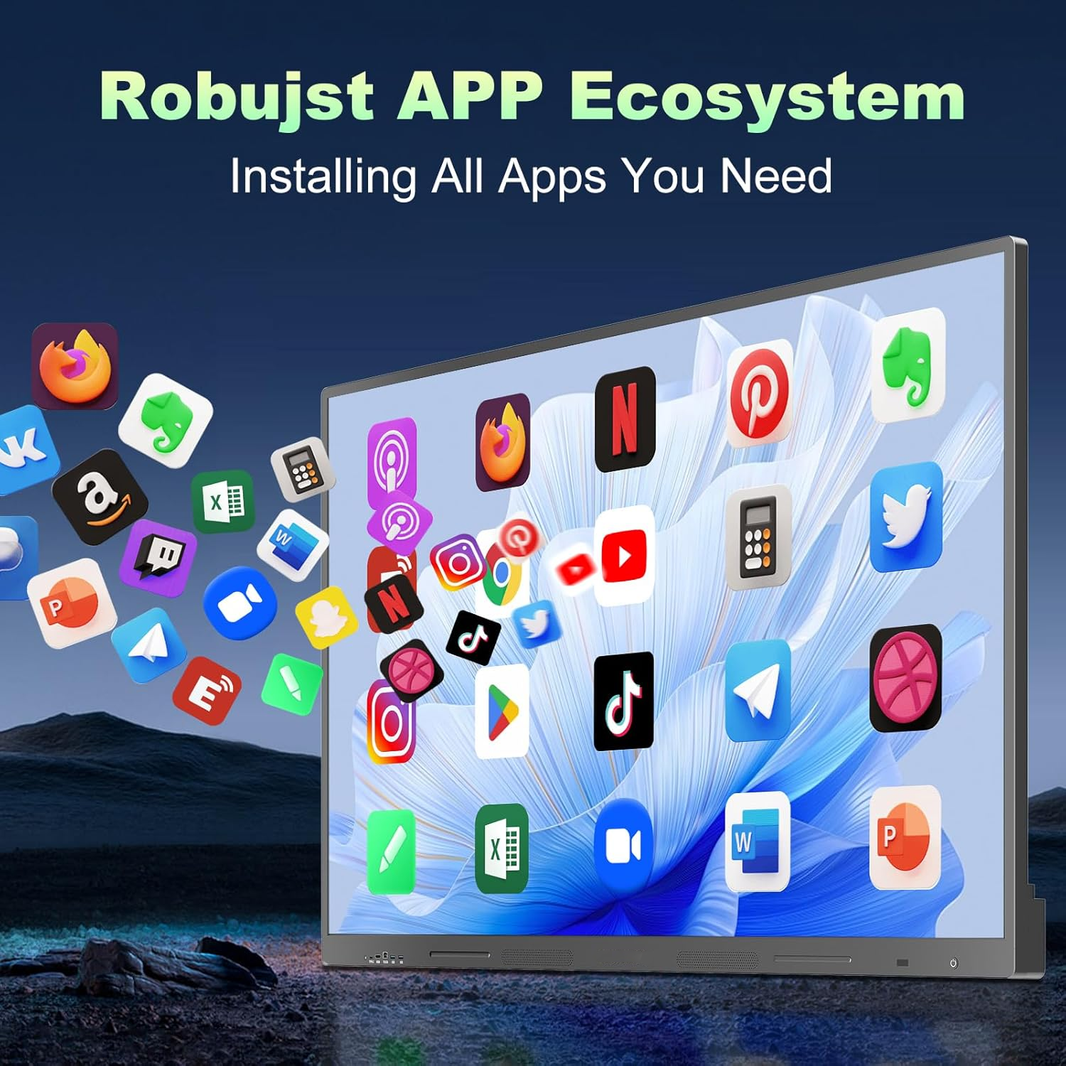
- Third-party app support
- Custom classroom workflows
Interactive displays allow flexible software integration:
- Open LMS platforms (Canvas, Moodle, Google Classroom)
- Collaborative whiteboarding (Explain Everything, OpenBoard)
- Cloud storage and lesson analytics
This flexibility ensures classrooms are future-proof.

Cost & Total Ownership
Smart boards generally cost less upfront but have hidden limitations:
- Dependence on external PCs
- Restricted software support
- Limited hybrid learning functionality
Interactive displays cost more initially but provide:
- Lower operational costs (no markers, reduced maintenance)
- Increased classroom efficiency
- Scalable hybrid learning
- Better long-term ROI
According to EdTech Magazine, 2025, schools replacing smart boards with interactive displays achieved 30% higher teaching efficiency and reduced device downtime.
See Interactive Display Buying Checklist

Case Studies
Lincoln High School, USA
- Replaced smart boards with 75-inch interactive displays
- Achieved 50% increase in student engagement
- Implemented hybrid learning for remote classrooms
University of Melbourne, Australia
- Converted lecture halls from smart boards to interactive displays
- Integrated cloud-based LMS and Zoom for hybrid lectures
- Enabled multi-user annotation for STEM labs

Choosing the Right Classroom Technology
Decision-makers should evaluate:
- Classroom Size: Larger rooms require 75–86 inch displays
- Hybrid Learning Needs: Integrated video and cloud tools
- Software Compatibility: LMS and collaborative apps
- Budget & Total Cost of Ownership: Evaluate long-term benefits
- Future-Proofing: Scalable and upgradable technology
Best Interactive Display Sizes for Classrooms

Smart boards provided an upgrade from traditional whiteboards, but interactive displays redefine modern classrooms. For schools and universities seeking engagement, hybrid learning readiness, and future-proof technology, interactive displays are the superior choice.
Investing in interactive displays is an investment in student success, teacher productivity, and long-term educational infrastructure.
Leave a comment