



Student Engagement Has Become a Bigger Problem Than Most Schools Expected
For years, schools primarily evaluated classroom technology based on functionality.
Could students see the screen?
Could teachers present lessons clearly?
Did the projector work reliably?
But modern education is no longer measured only by content delivery.
Today, schools are increasingly evaluated based on:
- Student participation
- Collaboration
- Classroom interaction
- Hybrid learning effectiveness
- Attention retention
- Learning outcomes
And this is where many traditional classrooms struggle.
Projector-based teaching environments often encourage passive learning:
students sit, watch, and listen.
But modern learners — especially younger digital-native generations — respond differently to interactive environments.
According to a 2025 report from EDUCAUSE, classrooms using collaborative display technologies reported significantly higher student participation and peer interaction compared to traditional lecture-centered classrooms.
This shift is one of the major reasons schools are redesigning classrooms around interactive displays instead of static presentation systems.
As discussed in our Ultimate Guide to Interactive Displays for Education, engagement is becoming one of the most important drivers behind classroom modernization strategies.

Engagement Is No Longer Just “Paying Attention”
One of the biggest misconceptions in education is that engagement simply means students looking at the teacher.
Modern engagement is much more complex.
Educational researchers increasingly define engagement through:
- Participation
- Interaction
- Collaboration
- Critical thinking
- Problem solving
- Peer communication
- Real-time feedback
In other words:
students learn better when they actively participate in lessons rather than passively consume information.
This is especially important in:
- STEM education
- Hybrid classrooms
- Collaborative workshops
- Higher education seminars
- Technical training environments
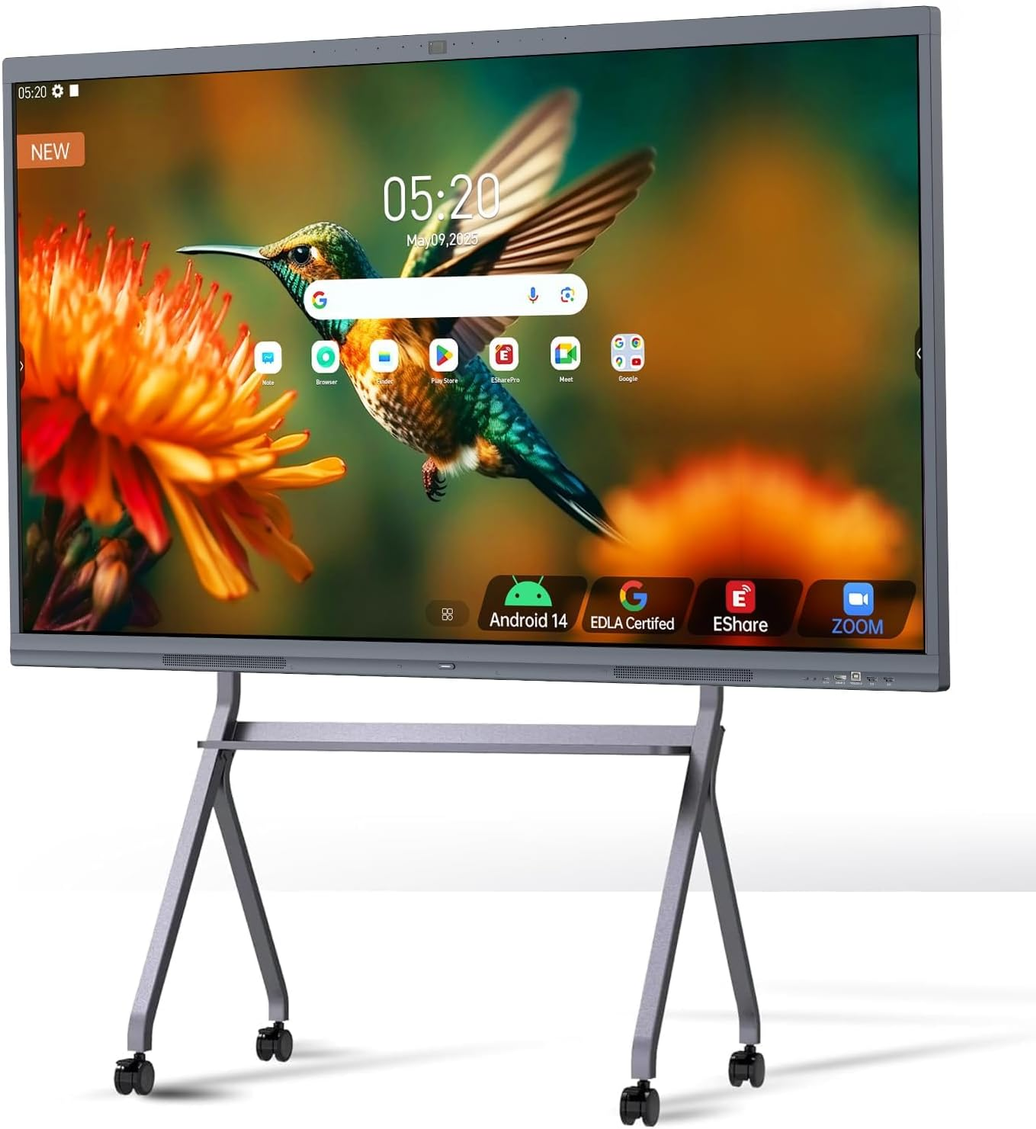
Interactive displays support these environments because they transform students from viewers into participants.

Why Traditional Classroom Technology Often Reduces Participation
Many classrooms still rely heavily on technologies originally designed decades ago.
Traditional projectors and whiteboards create several engagement limitations:
Passive Learning Environments
Projectors typically create one-directional teaching workflows where students observe rather than interact.

Limited Collaboration
Only one teacher can usually write or present at a time.
Students rarely interact directly with lesson content.

Weak Hybrid Participation
Remote learners often become disconnected because traditional classroom systems are not built for collaborative hybrid interaction.

Poor Visual Experience
Dim projection quality and limited annotation capabilities reduce attention retention, especially in larger classrooms.
This is one reason schools increasingly compare projector systems against modern collaborative displays.
Our Why Schools Are Replacing Projectors with Interactive Displays article explains why engagement improvements are driving many classroom upgrades.

Interactive Displays Turn Students Into Participants
The biggest difference between interactive displays and traditional classroom technology is simple:
Students can interact directly with content.
This fundamentally changes classroom dynamics.
Instead of students passively watching lessons, interactive displays allow them to:
- Solve problems collaboratively
- Annotate content directly
- Participate in quizzes
- Present ideas wirelessly
- Manipulate diagrams and simulations
- Engage with multimedia content
This creates a more active learning environment where students contribute instead of simply observe.
According to a 2024 ISTE classroom technology study, interactive touch-based learning environments improved classroom participation rates by nearly 40% compared to lecture-based presentation systems.

Multi-Touch Collaboration Changes Classroom Behavior
One of the most powerful engagement features of interactive displays is multi-touch collaboration.
Modern displays often support:
- 20-point touch interaction
- Simultaneous annotation
- Multi-user whiteboarding
- Group collaboration exercises
This encourages students to work together physically at the screen.
In traditional classrooms:
only the teacher controls the lesson flow.
In collaborative classrooms:
students become part of the instructional process.
This is particularly valuable in STEM environments where problem-solving and teamwork are essential.
Our Interactive Displays for STEM Education guide explores how collaborative touchscreens improve engineering, coding, and science participation.

Visual Learning Improves Attention Retention
Modern students are highly visual learners.
Interactive displays support:
- 4K visuals
- Real-time annotation
- Video integration
- Interactive diagrams
- Simulations
- Multimedia learning
Compared to traditional projectors, interactive displays provide significantly sharper visuals and brighter classroom presentation.
This matters because visual clarity directly affects attention retention.
For example:
- science simulations become easier to follow
- engineering diagrams become more readable
- historical maps become more immersive
- language learning becomes more interactive
Many schools deploying collaborative learning environments standardize around 75-inch interactive displays because they balance classroom visibility with collaborative flexibility.

Student Engagement in Hybrid Classrooms
Hybrid learning introduced a major engagement challenge for schools:
How do you keep remote students involved?
Traditional classroom systems perform poorly in hybrid environments because remote students become passive viewers.
Interactive displays improve hybrid participation by supporting:
- Real-time annotation
- Cloud whiteboarding
- Wireless collaboration
- Video conferencing integration
- Shared digital workspaces
Teachers can annotate lessons live while remote students participate simultaneously.
This creates a more unified classroom experience between physical and remote learners.
Our Interactive Displays for Hybrid Learning guide explains how schools build collaborative hybrid classrooms using interactive display ecosystems.

Wireless Sharing Encourages Participation
Student participation increases significantly when sharing content becomes easier.
Interactive displays support wireless casting from:
- laptops
- tablets
- Chromebooks
- smartphones
This removes friction from classroom collaboration.
Students can quickly:
- present projects
- share research
- collaborate on assignments
- contribute visual ideas
Instead of waiting for cables or teacher-controlled systems, participation becomes more natural and spontaneous.
Universities especially benefit from wireless collaboration in seminar-style learning environments.

Teachers Also Become More Engaged
Student engagement often mirrors teacher engagement.
Traditional classroom technology can create operational frustration:
- cable management
- projector calibration
- poor visibility
- disconnected systems
Interactive displays simplify classroom workflows.
Teachers can:
- launch lessons faster
- annotate naturally
- save notes instantly
- integrate multimedia seamlessly
- manage hybrid classrooms more efficiently
This allows teachers to focus more on interaction and less on troubleshooting technology.

Engagement Is Different Across Educational Levels
Elementary Education
Younger students respond strongly to:
- touch interaction
- movement-based learning
- visual engagement
- collaborative activities
Interactive displays help elementary teachers create more immersive lessons.

Secondary Education
Middle and high school students benefit from:
- collaborative problem-solving
- multimedia instruction
- group presentations
- STEM interaction

Higher Education
Universities increasingly use interactive displays for:
- seminars
- engineering collaboration
- hybrid lectures
- research presentations
- technical workshops
Large lecture spaces often deploy 86-inch interactive displays to improve visibility and collaboration across larger audiences.

Real-World Examples of Engagement Improvement
Case Study 1: STEM High School
A US STEM academy replaced projector systems with interactive displays across science and engineering classrooms.
Results included:
- 42% higher classroom participation
- Improved collaborative problem solving
- Better hybrid learning engagement

Case Study 2: Elementary School District
An elementary district implemented interactive displays in K-5 classrooms.
Teachers reported:
- longer student attention spans
- more classroom participation
- easier lesson interaction

Case Study 3: University Hybrid Lecture Hall
A university upgraded lecture halls with large-format interactive displays integrated with Teams and Zoom.
Faculty observed:
- stronger remote participation
- more interactive seminars
- improved collaboration during technical lessons

Common Mistakes Schools Make
Focusing Only on Hardware
Engagement depends on both hardware and collaborative teaching strategies.
Choosing Displays That Are Too Small
Poor visibility reduces participation.
Our Best Interactive Display Sizes for Education guide explains how to select the correct size for classroom engagement.
Ignoring Teacher Training
Interactive displays only improve engagement when teachers understand how to use collaborative features effectively.
Treating Displays Like Projectors
Schools achieve better engagement when displays become collaborative learning hubs rather than passive presentation screens.

The Future of Student Engagement
Educational engagement is increasingly shifting toward:
- interactive collaboration
- AI-assisted learning
- cloud participation
- hybrid classrooms
- immersive visualization
- student-led instruction
Interactive displays are becoming central to these environments because they combine:
- communication
- collaboration
- multimedia
- annotation
- wireless sharing
- hybrid learning
into one unified classroom system.
Schools investing in future-ready education environments increasingly prioritize engagement-focused classroom technology rather than simple presentation hardware.

Student engagement is no longer a secondary educational goal — it is becoming one of the most important indicators of classroom effectiveness.
Interactive displays improve engagement by transforming classrooms from passive presentation spaces into collaborative learning environments.
Through touch interaction, multimedia learning, hybrid participation, wireless sharing, and real-time collaboration, interactive displays help students become active participants in the learning process.
For schools, universities, and training centers planning long-term classroom modernization, engagement-focused interactive display systems are rapidly becoming foundational educational infrastructure.
Leave a comment