



Why This Comparison Still Matters in 2026
For many businesses, the projector has been the default choice for meeting rooms for decades. It’s familiar, relatively affordable, and widely used.
But over the past few years, a noticeable shift has been happening.
More companies are replacing projectors with interactive displays—not just for better visuals, but for a fundamentally different way of working.
So the question is no longer just about technology. It’s about:
👉 Which solution actually fits how modern teams collaborate today?
👉 Ultimate Guide to Interactive Displays for Meeting Rooms

The Core Difference: Projection vs Direct Display
At a glance, both devices serve the same purpose—showing content to a group.
But the way they do it is completely different.
A projector relies on projecting light onto a surface. That means image quality depends heavily on:
- Ambient lighting
- Screen quality
- Distance and alignment
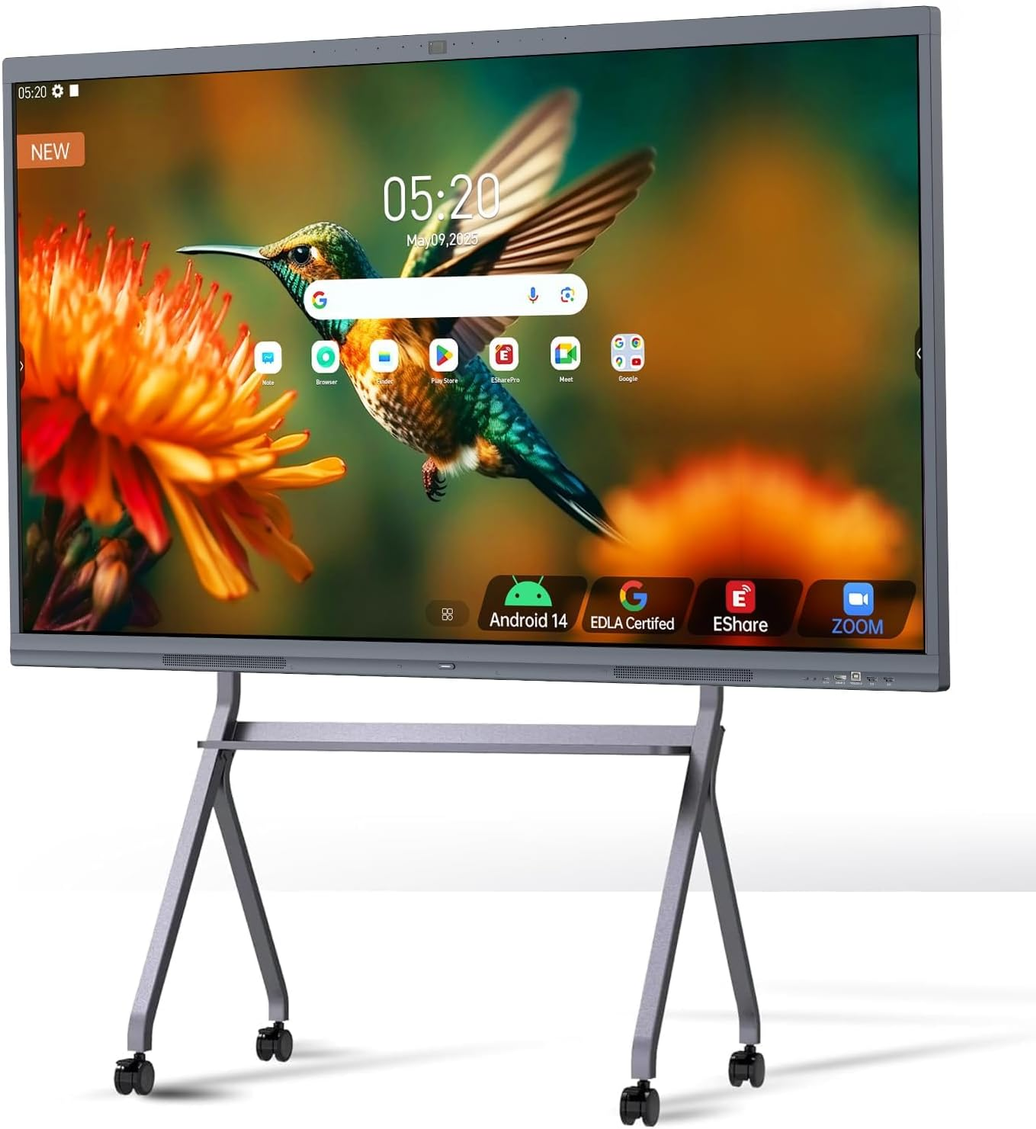
An interactive display, on the other hand, is a self-contained screen. It delivers consistent brightness, clarity, and—most importantly—interaction.
This difference may seem technical, but in real-world usage, it changes everything.

Where Projectors Still Make Sense
Despite the shift toward interactive displays, projectors haven’t disappeared—and for good reason.
In large venues such as auditoriums or temporary setups, projectors remain practical. They can scale to very large image sizes at a relatively low upfront cost.
They are also useful in environments where:
- Interactivity is not required
- Budget is the primary concern
- The setup is temporary
However, these scenarios are becoming more specialized.

Where Interactive Displays Excel
In contrast, interactive displays are designed for environments where collaboration is constant.
Instead of just showing content, they allow teams to:
- Annotate in real time
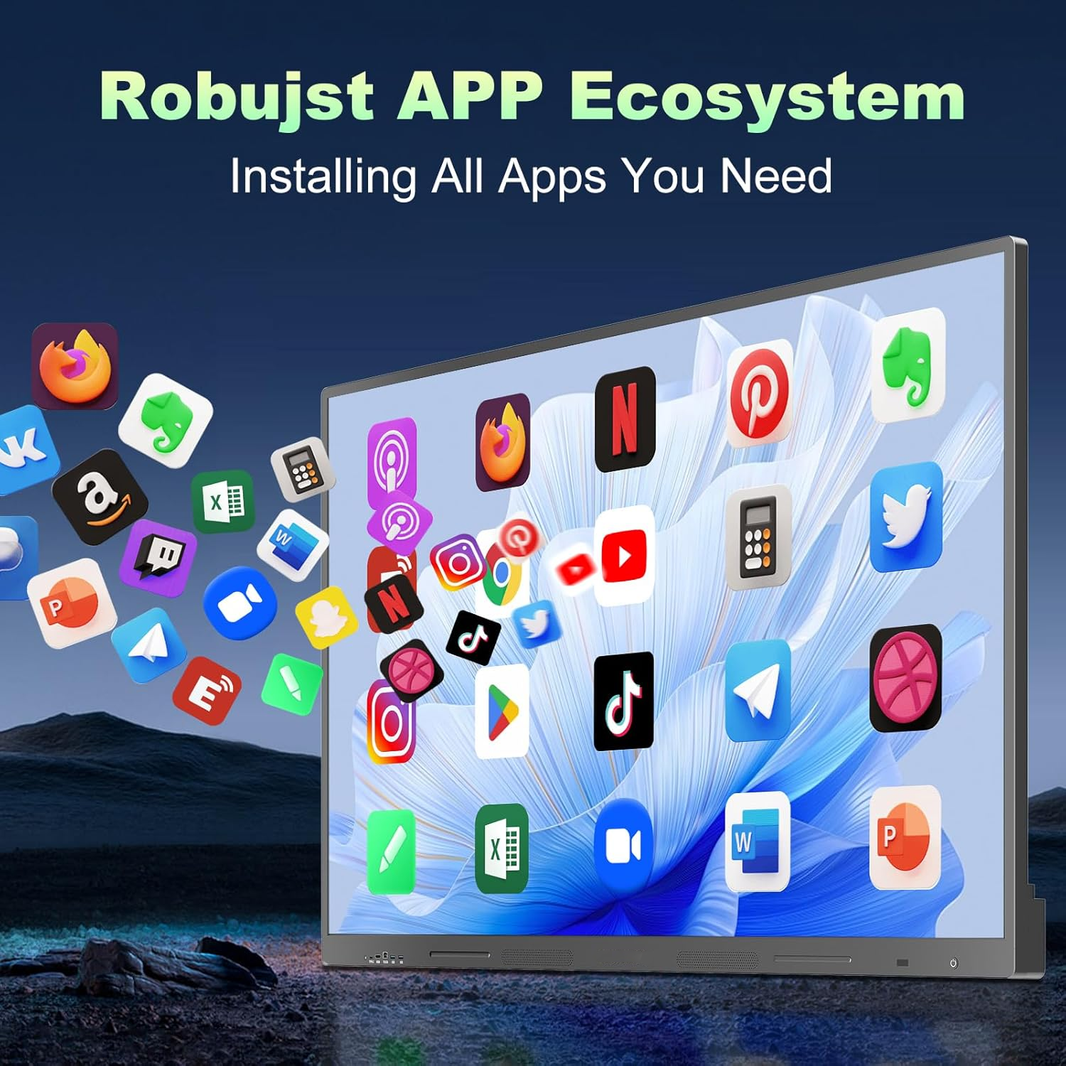
- Share screens wirelessly
- Integrate video conferencing
Research from McKinsey shows that improving collaboration tools can increase productivity in knowledge-based work by 20–25%. While hardware alone doesn’t drive all of that gain, tools like interactive displays remove friction that slows teams down.
This is why they are becoming standard in:
- Corporate meeting rooms
- Training environments
- Engineering discussions
👉Top Use Cases of Interactive Displays

The Hidden Cost of Projectors
At first glance, projectors appear more affordable.
But this is where many buyers make a critical mistake—focusing only on upfront cost.
In reality, projectors come with ongoing requirements:
- Lamp replacements
- Regular calibration
- External devices (speakers, whiteboards, conferencing tools)
According to lifecycle insights from IDC, ongoing maintenance and operational inefficiencies often make lower-cost hardware more expensive over time.
This is where Total Cost of Ownership (TCO) becomes a more accurate measure.

A Real-World Scenario: From Projector to Interactive Display
A mid-sized consulting firm provides a practical example.
For years, they used projectors in all meeting rooms. While functional, the setup required:
- Manual connections
- Frequent troubleshooting
- Separate tools for collaboration
Meetings often started late, and remote participants struggled to follow discussions.
When the company upgraded to interactive displays, the change was not immediate perfection. Teams needed time to adapt, and workflows had to evolve.
But within a few months, the impact became clear.
Meetings started faster. Teams collaborated directly on-screen. Remote participants became more engaged.
👉Interactive Display Solutions
From a financial perspective, the company initially paid more upfront—but reduced:
- Setup time
- Equipment redundancy
- Maintenance costs
The result was a measurable improvement in efficiency and a clear return on investment.

Image Quality: The Difference You Notice Every Day
One of the most immediate differences between projectors and displays is visual clarity.
Projectors often struggle in bright environments, leading to:
- Washed-out images
- Reduced readability
- Eye strain
Interactive displays maintain consistent brightness regardless of lighting conditions.
This may seem like a small detail—but in daily use, it significantly affects user experience.

Ease of Use: The Real Productivity Factor
Technology should simplify work, not complicate it.
Projector setups often require:
- Connecting cables
- Adjusting settings
- Managing multiple devices
Interactive displays are typically designed as all-in-one systems.
This reduces friction and allows meetings to start instantly.
According to Gartner, user experience is one of the most critical factors influencing technology adoption in enterprise environments.

Installation and Flexibility
Projectors often require:
- Ceiling mounting
- Alignment adjustments
- Controlled environments
Interactive displays offer more flexibility:
- Wall-mounted for permanent setups
- Mobile stands for flexible usage
👉 Wall Mounted vs Mobile Stand
This adaptability is especially valuable in dynamic workplaces.
How to Decide: A Practical Framework
For businesses evaluating the two options, the decision should not be based on trends—but on actual usage.
Ask yourself:
- Do you need interaction or just display?
- Is your environment fixed or flexible?
- Are you optimizing for cost today or value over time?
If your meetings are presentation-focused, a projector may still be sufficient.
But if collaboration, speed, and efficiency matter, interactive displays are usually the better choice.

It’s Not a Replacement—It’s an Upgrade
The shift from projectors to interactive displays is not just about better hardware.
It reflects a broader change in how teams work.
Modern workplaces demand:
- Faster decision-making
- Real-time collaboration
- Seamless integration
Interactive displays are built for that reality.
Projectors were built for a different era.
Leave a comment