




Introduction: Why Installation Matters More Than You Think
When businesses invest in interactive displays, they often focus on:
- Screen size
- Resolution
- Features
But overlook one critical factor:
👉 Installation method
The way an interactive display is installed directly impacts:
- Usability
- Collaboration efficiency
- Workspace flexibility
- Long-term ROI
Choosing between wall-mounted and mobile stand installation is not just a technical decision—it’s a strategic one.
👉 Ultimate Guide to Interactive Displays for Meeting Rooms

Understanding the Two Main Installation Types
Wall-Mounted Interactive Display
A fixed installation where the display is securely mounted to a wall.
- Permanent
- Stable
- Clean visual setup
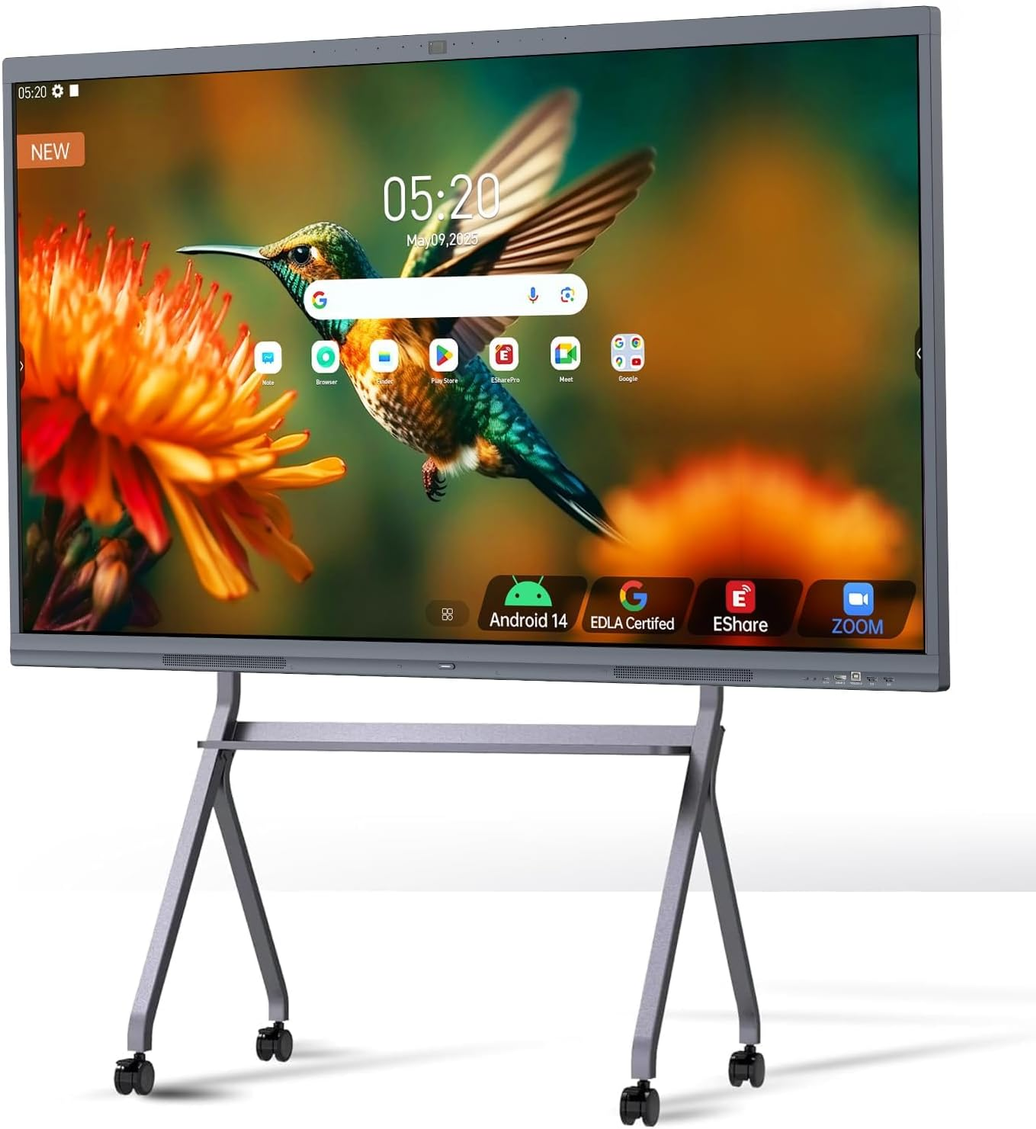
Mobile Stand Interactive Display
A movable setup where the display is attached to a wheeled stand.
- Flexible
- Portable
- Multi-purpose
👉 How to Choose the Right Interactive Display

Wall-Mounted Interactive Displays: Pros & Cons
Advantages
1. Clean & Professional Appearance
- Minimalist design
- Ideal for executive meeting rooms
2. Space Optimization
- Saves floor space
- Works well in smaller rooms
3. Stability & Security
- Fixed installation
- Lower risk of movement or damage
Disadvantages
- Not flexible
- Difficult to relocate
- Requires professional installation
👉 Wall-Mounted Interactive Displays

Mobile Stand Interactive Displays: Pros & Cons
Advantages
1. Flexibility & Mobility
- Move between rooms
- Adapt to changing needs
2. Easy Setup
- No drilling required
- Plug-and-play
3. Multi-Scenario Usage
- Training sessions
- Workshops
- Industrial environments
Disadvantages
- Takes up floor space
- Slightly less stable
- Less “built-in” appearance
👉 Mobile Stand Interactive Displays

Wall Mounted vs Mobile Stand: Direct Comparison
|
Feature |
Wall-Mounted |
Mobile Stand |
|
Flexibility |
Low |
High |
|
Space Usage |
Efficient |
Requires floor space |
|
Installation |
Complex |
Easy |
|
Mobility |
Fixed |
Portable |
|
Best For |
Dedicated rooms |
Flexible environments |

Which Installation Is Best for Your Business?
Choose Wall-Mounted If:
- You have fixed meeting rooms
- You want a premium, clean setup
- You prioritize stability
Choose Mobile Stand If:
- You need flexibility across spaces
- Your teams move frequently
- You operate in dynamic environments
👉 Top Use Cases of Interactive Displays

Installation Considerations by Industry
Corporate Offices
- Boardrooms → wall-mounted
- Shared spaces → mobile stand
Manufacturing & Industrial
- Mobile stands preferred
- Used across departments
Education & Training
- Classrooms → mobile stand
- Lecture halls → wall-mounted
👉Interactive Displays for Industrial Applications

Step-by-Step Installation Guide
Wall-Mounted Installation
- Determine mounting height
- Check wall structure
- Install bracket
- Mount display
- Connect devices
Mobile Stand Installation
- Assemble stand
- Attach display
- Lock wheels
- Connect power
Real-World Example: How a Manufacturing Company Optimized Display Installation

Company Background
A mid-sized manufacturing company with ~300 employees operates across:
- Headquarters office
- Two production facilities
- Engineering and operations teams
They rely heavily on:
- Daily production meetings
- Engineering collaboration
- Cross-department coordination
The Initial Problem
Their original setup included:
- Wall-mounted projectors
- Whiteboards
- Individual laptops
This created several operational issues.
1. Limited Flexibility
All tools were fixed in meeting rooms.
Teams had to:
- Move people instead of tools
- Delay discussions
- Schedule around room availability
2. Inefficient Collaboration
Engineering and production teams struggled to:
- Share diagrams
- Align in real time
- Resolve issues quickly
3. Time Lost in Setup
Each meeting required:
- Connecting devices
- Adjusting displays
👉 Average delay: 5–10 minutes per meeting
The Decision Process
The company evaluated two options:
Option 1: Wall-Mounted Displays
Pros:
- Clean setup
- Stable
Cons:
- No mobility
- Limited use cases
Option 2: Mobile Stand Displays
Pros:
- Flexible
- Cross-location usage
Cons:
- Requires space planning
Key Insight
👉 Their biggest problem was not display quality—but lack of mobility
The Solution
They implemented a hybrid approach:
Wall-Mounted Displays
- Used in executive meeting rooms
Mobile Stand Displays
- Used across production floors
- Enabled real-time collaboration
👉 Mobile Stand Interactive Displays
Implementation Challenges
1. Employee Training
Solution: short onboarding sessions
2. Workflow Adjustment
Solution: standardized meeting processes
Results After 3 Months
Faster Decision-Making
~30% improvement
Reduced Setup Time
From 5–10 minutes → <1 minute
Better Collaboration
Real-time problem solving across teams
Higher ROI
Displays used across multiple departments
Key Takeaway
👉 The best installation depends on workflow—not aesthetics

Common Installation Mistakes to Avoid
- Wrong mounting height
- Poor cable management
- Choosing the wrong setup type
- Ignoring room layout
👉7 Problems Interactive Displays Solve
Expert Framework: How to Decide
- Define room type
- Evaluate usage
- Consider flexibility
- Plan for future needs

Future Trends in Installation
- Adjustable mounts
- Smart mobility systems
- Modular workspaces
FAQ
Q1. Which is better: wall-mounted or mobile stand?
It depends on your usage scenario.
Q2. Are mobile stands safe?
Yes, modern designs ensure stability.
Q3. Can I switch installation types?
Most displays support both options.
Installation is not just setup—it’s a strategic decision.
The right choice will:
- Improve usability
- Enhance collaboration
- Maximize ROI
Leave a comment