




Businesses Don’t Have a Meeting Problem — They Have a Technology Workflow Problem
Most companies assume poor meetings are caused by people.
Too many discussions.
Too many participants.
Not enough preparation.
But in many modern workplaces, the real issue is something else entirely:
👉 The technology supporting the meeting is working against the team instead of helping it.
A delayed screen share.
A projector that takes five minutes to connect.
Audio issues during hybrid calls.
A meeting room that looks modern—but functions poorly.
These moments seem small individually. But repeated daily across an organization, they create massive operational inefficiency.
Research from McKinsey estimates that knowledge workers spend nearly 20% of their workweek searching for information or coordinating communication, much of it caused by fragmented collaboration systems.
That’s why modern meeting technology is no longer just an IT concern.
It’s a business productivity issue.
👉 Ultimate Guide to Interactive Displays for Meeting Rooms

The Most Expensive Mistake: Treating Meetings as Presentation Spaces Instead of Collaboration Spaces
Many businesses still design meeting rooms around outdated workflows.
The setup usually looks familiar:
- Projector at the front
- One presenter controlling everything
- Everyone else passively watching
This model worked in the past because meetings were primarily informational.
But modern work is different.
Today’s meetings are increasingly:
- Collaborative
- Cross-functional
- Hybrid
- Fast-moving
Teams need to brainstorm, annotate, edit, and make decisions in real time.
When the technology only supports “displaying content,” collaboration slows down.
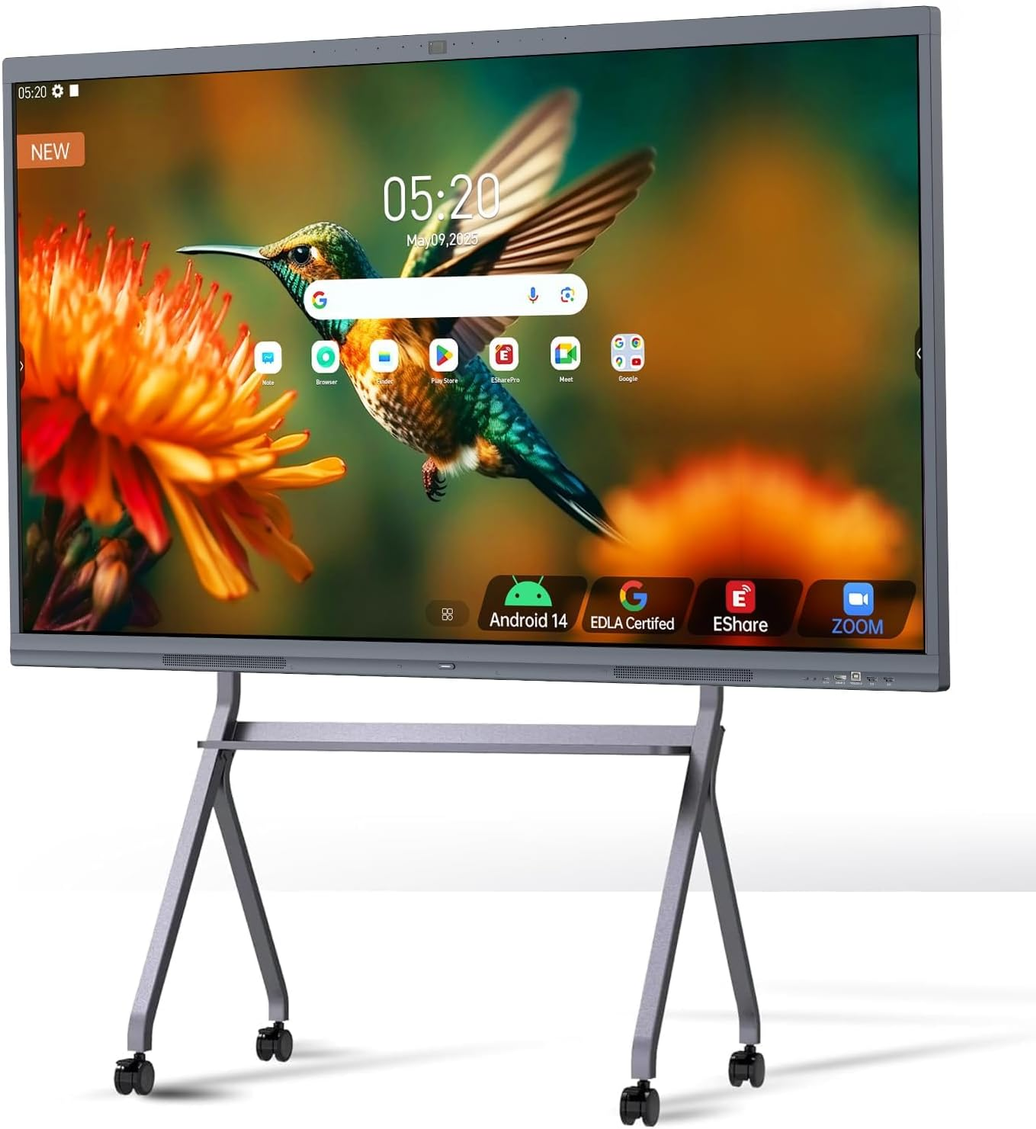
This is one reason interactive displays are replacing traditional presentation tools in many organizations.
👉 Interactive Display vs Projector

Mistake #2: Buying Based on Specifications Instead of Workflow
One of the most common procurement mistakes is focusing too heavily on specifications.
Businesses compare:
- Resolution
- Brightness
- Screen size
But they often ignore the most important question:
❓How will teams actually use this technology every day?
A display can have excellent technical specifications and still create a poor meeting experience if:
- Wireless sharing is unreliable
- Touch interaction feels delayed
- The system is difficult to use
According to Gartner, user adoption and ease of use are among the strongest predictors of workplace technology success.
In other words:
👉 Technology that people avoid using has no ROI.

Mistake #3: Ignoring Hybrid Meeting Realities
Hybrid work changed meeting expectations permanently.
But many meeting rooms were never redesigned for hybrid collaboration.
This creates a common imbalance:
People inside the room collaborate naturally.
Remote participants struggle to engage.
Typical symptoms include:
- Poor camera placement
- Weak audio pickup
- Limited content visibility
The result is a two-tier meeting experience.
Research from Microsoft’s Work Trend Index consistently shows that remote inclusion remains one of the biggest challenges in hybrid collaboration environments.
Businesses that ignore this issue often experience:
- Reduced engagement
- Slower decision-making
- Communication gaps between teams
👉 Best Interactive Displays for Hybrid Meetings

Mistake #4: Underestimating Ease of Use
One of the biggest hidden productivity killers is complexity.
A meeting should not begin with:
- Searching for cables
- Adjusting inputs
- Restarting devices
- Troubleshooting connections
Yet this happens daily in many organizations.
According to enterprise IT research from IDC, setup friction remains one of the leading causes of inefficient meetings.
The most effective meeting technology is often not the most advanced—it’s the easiest to use consistently.
That’s why many companies are moving toward all-in-one collaboration systems.

A Real-World Scenario: The “Modern” Meeting Room That Wasn’t Modern
A regional logistics company invested heavily in upgrading its headquarters meeting rooms.
On paper, the rooms looked impressive:
- Large projector systems
- Video conferencing tools
- Multiple connected devices
But employees continued complaining about meeting inefficiency.
The issue wasn’t hardware quality.
It was workflow fragmentation.
Different tools handled different tasks:
- One system for presentations
- Another for conferencing
- Separate whiteboards for collaboration
Meetings frequently started late because employees needed time to configure everything.
After reviewing usage patterns, the company redesigned the rooms around integrated collaboration systems using interactive displays.
👉 Interactive Display Solutions
The change reduced:
- Setup time
- Technical interruptions
- Reliance on multiple disconnected tools
More importantly, participation increased because interaction became simpler and more natural.

Mistake #5: Choosing Technology That Cannot Scale
Another common issue appears when businesses grow.
A meeting room setup that works for one team may fail completely across multiple offices or departments.
Scalability problems often include:
- Inconsistent systems across rooms
- Different user interfaces
- Compatibility issues between locations
This increases training requirements and IT support complexity.
Modern organizations increasingly prioritize standardized collaboration ecosystems rather than isolated devices.

Mistake #6: Treating Installation as an Afterthought
Many businesses focus heavily on the device itself while ignoring installation quality.
But poor placement can reduce usability dramatically.
Common issues include:
- Incorrect screen height
- Poor viewing angles
- Insufficient cable management
- Limited mobility
👉 Wall Mounted vs Mobile Stand
Even high-end technology performs poorly when the physical setup is wrong.

Mistake #7: Prioritizing Upfront Cost Over Long-Term Value
This may be the most common mistake of all.
Businesses often choose cheaper meeting technology assuming they are saving money.
But lower upfront cost frequently leads to:
- Higher maintenance
- Lower productivity
- More troubleshooting
- Faster replacement cycles
According to lifecycle research from IDC, organizations increasingly evaluate collaboration technology based on Total Cost of Ownership (TCO) rather than initial purchase price.
This shift is important because meeting technology affects daily operational efficiency—not just budgets.
👉 How Long Do Interactive Displays Last?

What High-Performing Meeting Rooms Have in Common
When you analyze efficient meeting environments, a pattern emerges.
The best meeting rooms are not necessarily the most expensive.
They are the most intentional.
Successful organizations prioritize:
- Simplicity
- Reliability
- Collaboration
- Standardization
Technology becomes invisible because it supports the workflow naturally.
That’s the real goal.

The Bigger Shift: From Meeting Technology to Collaboration Infrastructure
The workplace is changing rapidly.
Meetings are no longer isolated events—they are part of continuous collaboration ecosystems.
This changes how businesses evaluate technology.
The conversation is shifting from:
❌ “What device should we buy?”
to:
✅ “How do we help teams collaborate better?”
Interactive displays are growing because they align with this broader transformation.

Most Meeting Problems Start Before the Meeting Begins
Poor meetings are rarely caused by discussion quality alone.
More often, they begin with:
- Inefficient systems
- Fragmented tools
- Technology friction
Businesses that improve collaboration technology often discover something important:
👉 Better meetings are not just about communication.
They are about removing obstacles that prevent communication from happening naturally.
👉 Looking to improve collaboration and reduce meeting friction?
Leave a comment