



The Classroom Is Evolving
For decades, whiteboards were the default teaching tool in classrooms. Teachers would write lessons, draw diagrams, and interact directly with students in a physical space.
However, the 21st-century classroom now demands:
- Real-time collaboration
- Remote and hybrid learning capabilities
- Integration with cloud learning platforms
- Multimedia content delivery
- Data-driven teaching insights
Traditional whiteboards simply cannot keep pace with these requirements. Interactive displays are emerging as the central hub of modern classrooms, combining the tactile familiarity of a whiteboard with cutting-edge technology for collaboration and digital engagement.
As discussed in our Ultimate Guide to Interactive Displays for Education, schools are increasingly replacing conventional teaching tools with interactive flat panels to boost engagement and productivity.

What Is a Traditional Whiteboard?
A traditional whiteboard is a flat, non-digital surface designed for writing or drawing using dry-erase markers. Common features include:
- Manual annotation
- Erasable surface
- Fixed placement
- Low maintenance
While simple and reliable, traditional whiteboards are limited to physical presence, cannot integrate digital content, and offer no hybrid or wireless capabilities.

What Is an Interactive Display?
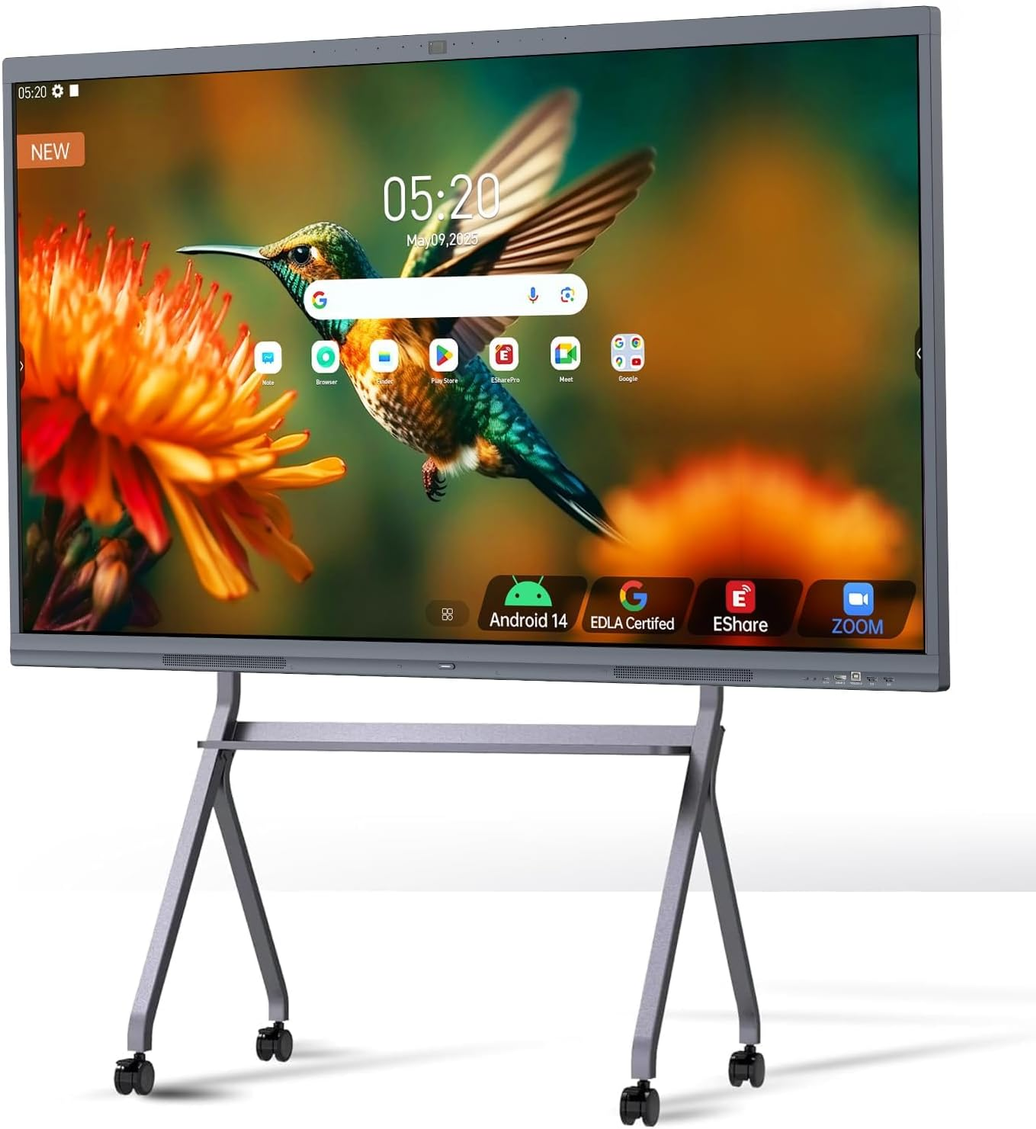
Interactive displays are touchscreen monitors designed for classrooms. They combine multiple functions in one device:
- Digital whiteboarding
- Wireless screen sharing
- Video conferencing integration
- Cloud-based lesson storage
- Multi-user touch interaction
Interactive displays are essentially the evolution of the whiteboard, bringing it into a hybrid and technology-enabled era.

Key Comparison: Interactive Display vs Traditional Whiteboard
| Feature | Interactive Display | Traditional Whiteboard |
|---|---|---|
| Touch Interaction | Multi-touch, stylus support | Manual only |
| Digital Annotation | Yes, saves to cloud | No |
| Multimedia Integration | Videos, images, web content | No |
| Remote Collaboration | Zoom, Teams, Google Meet | None |
| Screen Sharing | Wireless, multi-device | None |
| Hybrid Learning Support | Excellent | Poor |
| Long-Term ROI | High | Low |
| Maintenance | Minimal | Moderate (markers, cleaning) |

Engagement: Why Interactivity Matters
Traditional Whiteboard Limitations
- Static content, only visible in class
- Teacher-centered learning
- No digital participation for remote students
Interactive Display Advantages
- Real-time student collaboration
- Multimedia-rich content keeps students engaged
- Remote learners can participate simultaneously
- Touch-based interactions support kinesthetic learning
A 2023 study by EDUCAUSE showed that classrooms using interactive displays had 45% higher student engagement compared with traditional whiteboards.

Collaboration: Beyond the Classroom Walls
Interactive displays enable collaboration beyond the physical classroom:
- Students can annotate simultaneously on multiple devices
- Group projects can include remote participants
- Teachers can share lesson content instantly to students’ devices
Traditional whiteboards restrict collaboration to whoever is physically in the room, limiting interaction and peer-to-peer learning.

Hybrid Learning Readiness
Hybrid classrooms require technology capable of supporting both in-person and remote students.
Traditional whiteboards fail in hybrid environments:
- Remote students see only the camera feed, often unclear
- Annotation is limited to physical presence
- No integration with video conferencing platforms
Interactive displays provide:
- Built-in Zoom/Teams integration
- Cloud-based lesson storage
- Multi-user simultaneous annotation
- Wireless screen sharing for student devices
Schools adopting interactive displays for hybrid classrooms report 30% improved participation from remote learners, according to a 2024 ISTE report.

Long-Term ROI: Why Interactive Displays Pay Off
Though interactive displays have a higher upfront cost, the long-term benefits outweigh traditional whiteboards:
- Reduced operational costs (no markers, erasers, or replacement boards)
- Lower maintenance downtime
- Improved teaching efficiency
- Enhanced hybrid learning capabilities
- Better future-proofing for digital classrooms
A comparative study by EdTech Magazine (2025) revealed that schools replacing whiteboards with interactive displays achieved a 25–40% increase in overall teaching efficiency.

Case Studies: Schools That Made the Switch
Example 1: Lincoln High School, USA
- Replaced all traditional whiteboards with 75-inch interactive displays
- Increased student engagement by 50%
- Implemented wireless collaboration for hybrid learning
Example 2: University of Melbourne, Australia
- Converted lecture halls to hybrid-ready classrooms
- Integrated OPS PC interactive displays for multi-window video conferencing
- Recorded lectures and shared annotations via cloud LMS
These examples illustrate that interactive displays are no longer “nice-to-have” but essential for modern classrooms.

Software Ecosystem Matters
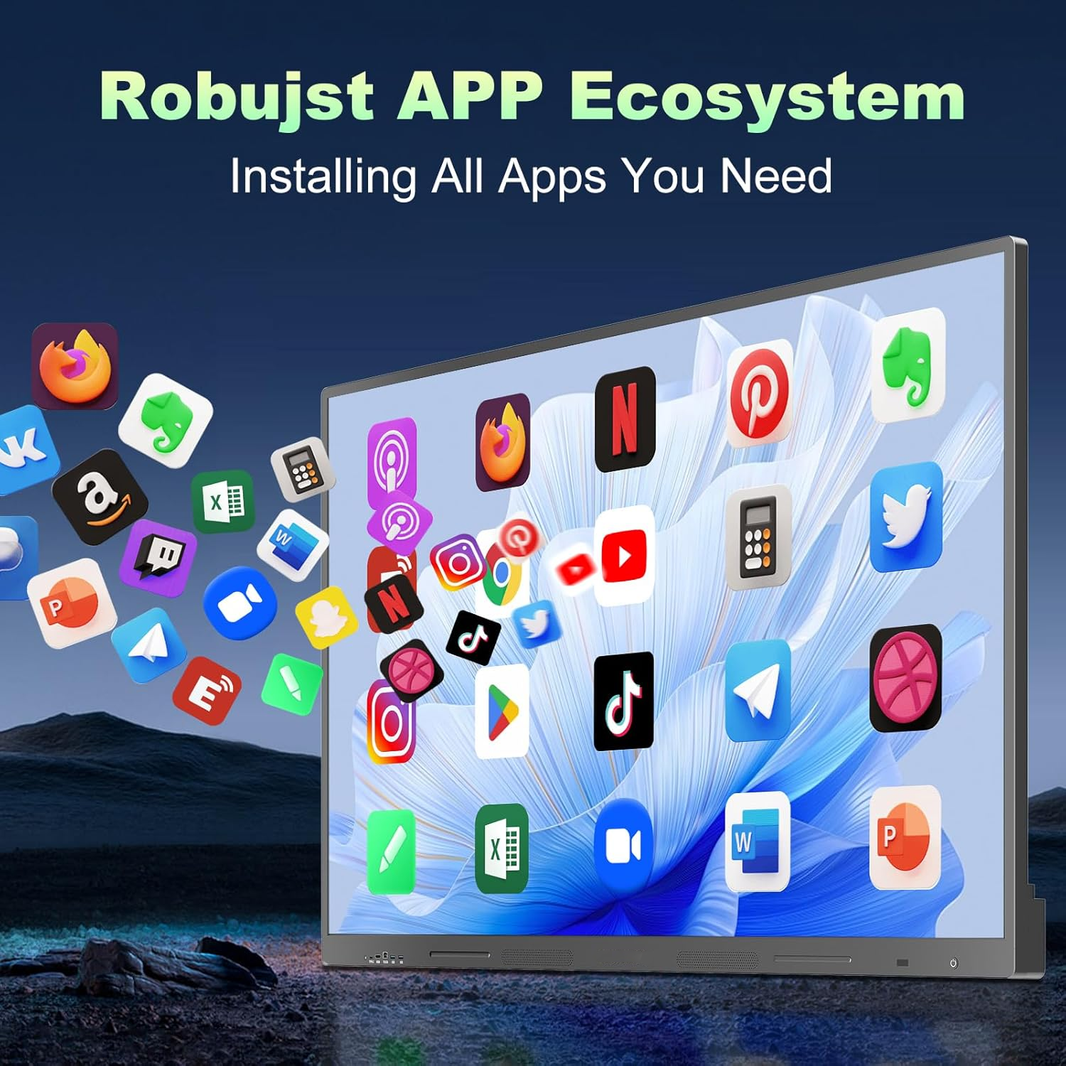
Interactive displays work best when integrated with a robust software ecosystem:
- Interactive whiteboarding software (e.g., Explain Everything, OpenBoard)
- Learning management systems (e.g., Moodle, Canvas)
- Video conferencing platforms (Zoom, Microsoft Teams)
- Cloud storage for lesson materials
Traditional whiteboards cannot provide these integrated workflows, limiting classroom efficiency and scalability.
👉 Interactive Whiteboard Software Guide

Choosing the Right Solution
When deciding between interactive displays and traditional whiteboards, schools should consider:
- Classroom Size – Larger spaces benefit from bigger displays (65, 75, 86-inch)
- Hybrid Learning Needs – Remote participation is essential
- Budget & Total Cost of Ownership – Include long-term operational costs
- Software Compatibility – Integration with LMS and conferencing platforms
- Ease of Maintenance – Fewer consumables, less downtime
Our Interactive Display Buying Checklist provides a detailed framework for school decision-makers.

Future-Proofing Classrooms
Classrooms are evolving rapidly, with new trends emerging:
- AI-assisted annotation and lesson summaries
- Real-time language translation
- Virtual and augmented reality integration
- STEM and coding collaboration tools
Interactive displays are central to this evolution, whereas traditional whiteboards cannot adapt to emerging educational technologies.

Traditional whiteboards have served education well, but they cannot meet the demands of modern hybrid, collaborative, and multimedia classrooms. Interactive displays offer superior engagement, real-time collaboration, hybrid learning support, and long-term ROI.
Educational institutions planning classroom upgrades should view interactive displays not just as replacements but as future-proof learning hubs.
Whether deploying a single classroom display or outfitting an entire campus, the evidence supports the shift from whiteboards to interactive displays as an investment in student success and teaching efficiency.
Leave a comment