



Modern education is rapidly evolving. Traditional whiteboards and projectors are no longer enough to support collaborative learning, hybrid classrooms, and digital teaching environments.
Interactive displays for education are becoming the center of modern smart classrooms because they combine ultra-clear visuals, touch interaction, wireless collaboration, and digital whiteboarding into one powerful solution.
Schools, universities, and training centers are increasingly adopting interactive flat panel displays to improve student engagement, simplify teaching workflows, and create future-ready learning environments.
In this guide, we’ll explore everything educators and school buyers need to know about interactive classroom displays in 2026.

What Is an Interactive Display for Education?
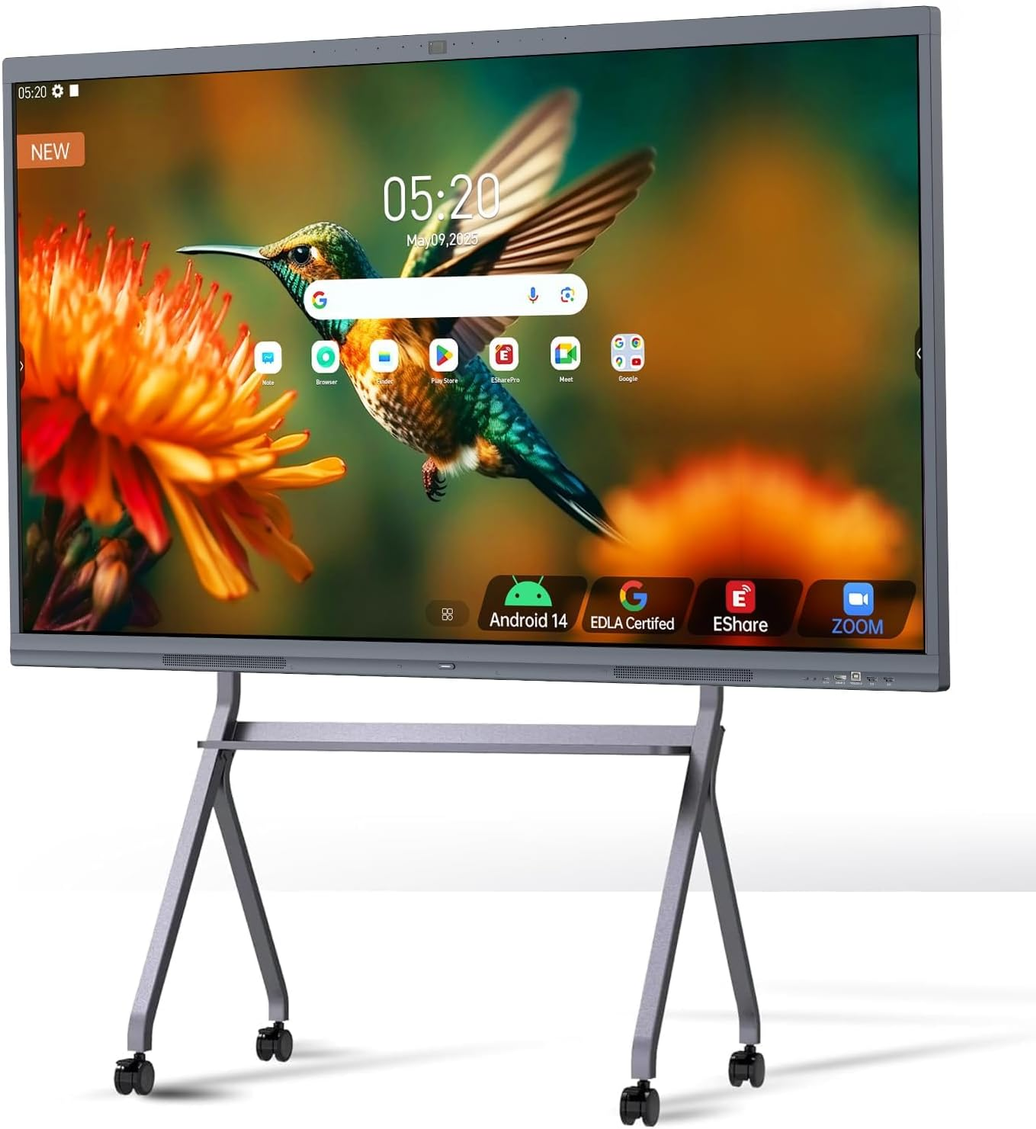
An interactive display for education is a large touchscreen display designed specifically for classrooms, lecture halls, and training environments. These displays combine the functionality of a whiteboard, projector, touchscreen tablet, and collaboration platform into a single device.
Teachers can write directly on the screen, display presentations, annotate lessons, share student work, launch educational software, and collaborate in real time.
Unlike traditional projectors, interactive displays provide:
- 4K ultra-clear visuals
- Multi-touch writing
- Wireless screen sharing
- Digital whiteboarding
- Integrated Android systems
- OPS PC compatibility
- Cloud collaboration
- Better classroom visibility

Interactive Display vs Traditional Classroom Technology
| Feature | Interactive Display | Projector | Whiteboard |
|---|---|---|---|
| Touch Interaction | Yes | No | Limited |
| Brightness | High | Medium | N/A |
| Maintenance | Low | High | Low |
| Wireless Sharing | Yes | Limited | No |
| Collaboration | Excellent | Moderate | Low |
| Remote Learning Support | Excellent | Limited | No |
| Visual Clarity | 4K UHD | Depends on lighting | Manual only |

Why Schools Are Replacing Projectors
Many schools are moving away from projectors because they struggle to meet the needs of modern digital classrooms.
Projectors often suffer from:
- Low brightness in well-lit rooms
- Bulb replacement costs
- Shadow interference
- Blurry visuals
- Limited interactivity
- Difficult maintenance
Interactive displays solve these problems while creating a much more engaging learning environment.
Benefits Over Projectors
Better Visibility
Interactive displays maintain bright and sharp visuals even in classrooms with strong ambient lighting.
No Shadow Interference
Teachers can stand close to the display without blocking projected content.
Lower Maintenance
There are no projector lamps to replace, reducing long-term maintenance costs.
Enhanced Collaboration
Students and teachers can interact directly with content using touch gestures and digital annotation.
Hybrid Learning Ready
Interactive displays integrate easily with Zoom, Microsoft Teams, and Google Meet.

Benefits of Interactive Displays in Education
Interactive displays improve teaching efficiency, student engagement, and classroom collaboration.
Benefits for Teachers
Teachers can:
- Annotate lessons in real time
- Save classroom notes digitally
- Use multimedia teaching tools
- Share content wirelessly
- Integrate cloud learning platforms
- Launch interactive learning applications
Improved Lesson Delivery
Teachers can combine videos, presentations, web content, and annotations into a more dynamic learning experience.
Faster Collaboration
Wireless sharing allows multiple devices to connect simultaneously.
Benefits for Students
Students are more engaged when lessons become interactive.
Interactive displays support:
- Collaborative learning
- Group activities
- Real-time participation
- Touch interaction
- Visual learning
- STEM demonstrations
Higher Engagement
Interactive classrooms encourage participation instead of passive observation.
Better Accessibility
Large 4K displays improve visibility for students sitting farther away.
Benefits for Schools
Schools benefit from:
- Reduced maintenance costs
- Long product lifespan
- Better technology integration
- Future-ready classrooms
- Simplified device management

Interactive Display Features Explained
Modern education interactive displays include a wide range of advanced features.
4K UHD Resolution
Ultra-high-definition displays improve text readability, video clarity, and visual detail.
Multi-Touch Technology
Multiple students can write and interact simultaneously.
Wireless Screen Sharing
Teachers and students can share content directly from laptops, tablets, and smartphones.
Digital Whiteboard
Built-in whiteboarding software allows lesson annotation and collaboration.
OPS PC Support
OPS modules enable full Windows computing directly inside the display.
Android Operating System
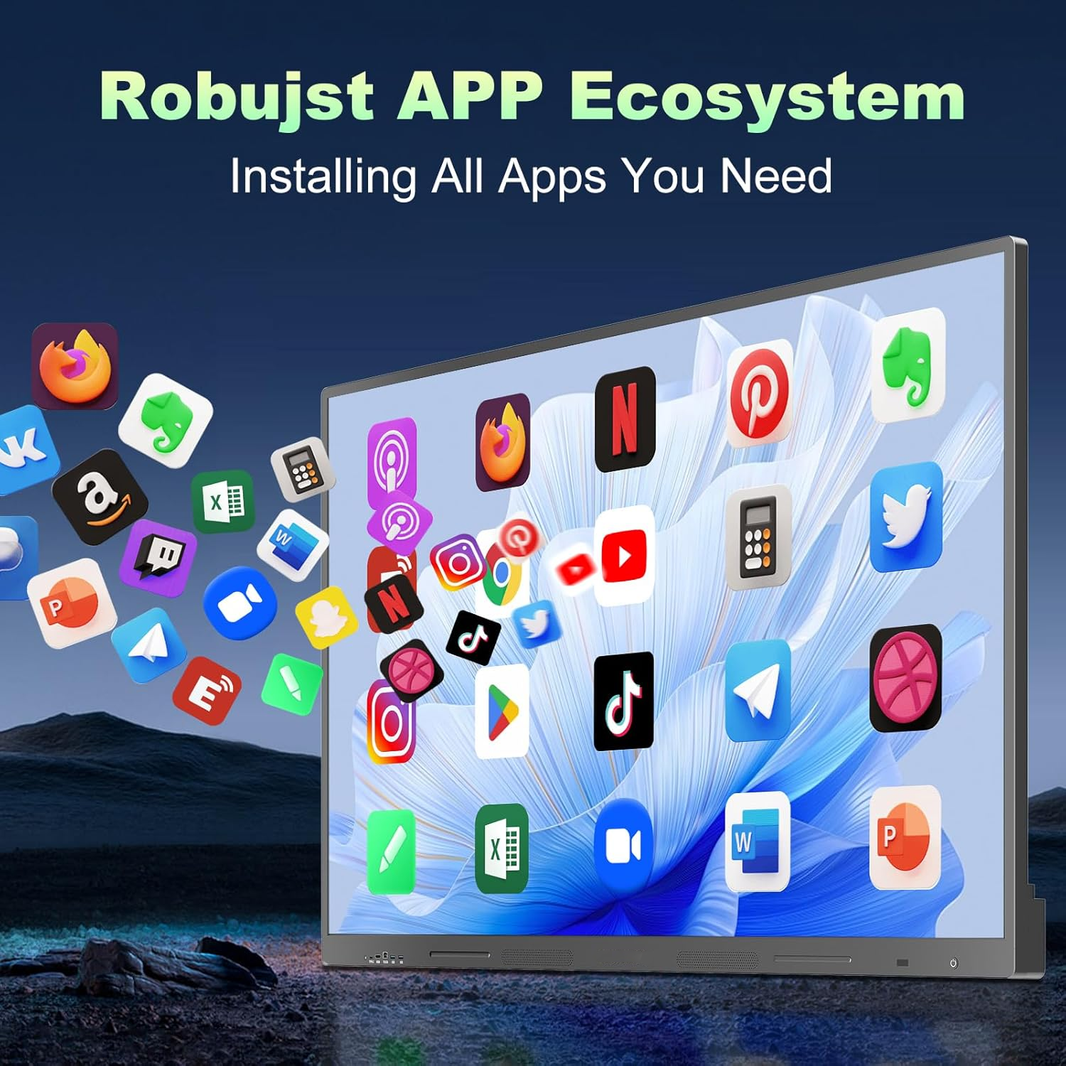
Many interactive displays include integrated Android systems for standalone operation.
Anti-Glare Glass
Anti-glare technology improves visibility in bright classrooms.
Eye Comfort Technology
Low blue light and flicker-free panels reduce eye strain during long teaching sessions.
AI Camera and Microphone Arrays
Advanced models support hybrid learning and video conferencing.

Best Interactive Display Sizes for Classrooms
Choosing the correct screen size is extremely important for classroom visibility and student engagement.
Recommended Classroom Sizes
| Classroom Type | Recommended Display Size |
| Small Classroom | 65 Inch |
| Medium Classroom | 75 Inch |
| Large Classroom | 86 Inch |
| Lecture Hall | 98 Inch |
65 vs 75 vs 86 Inch Interactive Displays
65 Inch Interactive Display
Best for:
- Small classrooms
- Huddle learning spaces
- Training rooms
- Small group teaching
75 Inch Interactive Display
Best for:
- Standard classrooms
- Collaborative teaching
- Hybrid classrooms
- Medium-sized schools
86 Inch Interactive Display
Best for:
- Large classrooms
- Universities
- Lecture halls
- STEM labs
Viewing Distance Guide
| Screen Size | Recommended Viewing Distance |
| 65 Inch | 2–4 meters |
| 75 Inch | 3–5 meters |
| 86 Inch | 4–7 meters |
Education Use Cases
Interactive displays are used across many educational environments.
Interactive Displays for Elementary Schools
Elementary classrooms benefit from:
- Interactive games
- Touch-based learning
- Visual storytelling
- Collaborative activities
Recommended Size: 65 Inch or 75 Inch
Interactive Displays for Middle & High Schools
These environments require:
- Multimedia teaching
- STEM support
- Classroom collaboration
- Digital whiteboarding
Recommended Size: 75 Inch
Interactive Displays for Universities
Universities need:
- Large-scale presentation support
- Hybrid lecture systems
- Multi-device collaboration
- Advanced conferencing tools
Recommended Size: 86 Inch or larger
Interactive Displays for STEM Education
STEM classrooms use interactive displays for:
- Scientific visualization
- Engineering demonstrations
- Coding instruction
- Collaborative problem-solving
Interactive Displays for Hybrid Learning
Hybrid learning combines in-person and remote education.
Interactive displays support:
- Zoom classrooms
- Microsoft Teams lessons
- Google Meet integration
- Wireless collaboration
- Real-time annotation
Hybrid learning has become one of the fastest-growing educational technology segments.
Interactive Whiteboard Software
Interactive whiteboarding software is one of the most important classroom features.
Teachers can:
- Write digitally
- Save annotations
- Share lessons online
- Record classroom sessions
- Collaborate in real time
Key Whiteboarding Features
| Feature | Benefit |
| Annotation | Real-time lesson interaction |
| Cloud Saving | Easy lesson storage |
| Multi-User Writing | Collaborative learning |
| Wireless Sharing | Flexible classroom teaching |
| Screen Recording | Lesson playback |

Installation & Mounting Options
Schools can install interactive displays in several ways.
Wall Mount Installation
Best for:
- Permanent classrooms
- Standard school environments
- Fixed teaching spaces
Mobile Cart Installation
Best for:
- Flexible classrooms
- Shared learning spaces
- Multi-room usage
Height Adjustable Stands
Best for:
- Accessibility
- Younger students
- Flexible classroom ergonomics
ROI & Total Cost of Ownership

Interactive displays provide long-term value for schools.
Compared with projectors, they reduce:
- Maintenance costs
- Lamp replacement expenses
- Downtime
- Energy consumption
ROI Comparison Table
| Cost Factor | Projector | Interactive Display |
|---|---|---|
| Lamp Replacement | High | None |
| Maintenance | High | Low |
| Lifespan | Shorter | Longer |
| Interactivity | Limited | Advanced |
| Hybrid Learning | Weak | Excellent |
Interactive displays may have a higher initial investment, but they significantly reduce long-term operational costs while improving teaching efficiency and classroom engagement.
Over a typical lifecycle of 5–8 years, schools often achieve a lower total cost of ownership compared to traditional projection systems.
How to Choose an Interactive Display for Schools

Choosing the right display depends on classroom size, teaching goals, and budget planning.
Important Factors
Classroom Size
Larger classrooms require larger displays to ensure visibility for all students, especially those seated at the back.
Student Count
The number of students directly affects required screen size, brightness, and viewing angles.
Operating System
Schools typically choose between:
- Android built-in systems (simple, standalone use)
- OPS Windows PC modules (advanced software compatibility)
Connectivity
Essential connectivity options include:
- HDMI input/output
- USB-C one-cable connection
- Wireless screen sharing
- LAN / network integration
- Cloud-based teaching platforms
Software Ecosystem
Ensure compatibility with:
- Digital whiteboard tools
- LMS platforms (Google Classroom, Moodle, etc.)
- Video conferencing tools (Zoom, Microsoft Teams)
Budget & Long-Term Value
Instead of focusing only on upfront cost, schools should evaluate:
- Maintenance cost
- Lifespan
- Upgrade flexibility
- Teaching efficiency improvement
Interactive Display Buying Checklist
Before purchasing an interactive display for education environments, schools should confirm:
- Correct screen size for classroom layout
- 4K UHD resolution quality
- Smooth and accurate multi-touch performance
- Built-in whiteboard software
- Wireless screen sharing capability
- Hybrid learning compatibility
- Flexible installation options (wall mount / mobile stand)
- Warranty and technical support coverage
- OPS / Android system flexibility
- Future software upgrade support
A structured checklist ensures schools invest in a solution that will remain effective for years.
Final Thoughts
Interactive displays are redefining education by transforming traditional classrooms into dynamic, collaborative, and digital learning environments.
Compared with projectors and traditional whiteboards, they deliver:
- Better visibility
- Stronger student engagement
- Lower long-term costs
- Greater teaching flexibility
- Full support for hybrid learning
As schools continue to invest in digital transformation, interactive displays are becoming a foundational technology for modern education systems.
Whether upgrading a single classroom or deploying across an entire campus, choosing the right interactive display plays a critical role in improving both teaching effectiveness and student learning outcomes.
Leave a comment