


What Is an Interactive Whiteboard? A Complete Guide for Business and Industrial Users
Interactive whiteboards have become essential tools in modern workplaces, replacing static presentation methods with dynamic, collaborative, and data-driven experiences. While many people associate them with classrooms, their real impact is increasingly seen in corporate environments, industrial systems, and smart collaboration spaces.
In this guide, we’ll explore what an interactive whiteboard is, how it works, the technologies behind it, and why it’s a critical investment for businesses.
👉 For a complete overview of features, comparisons, and solutions, visit the
interactive whiteboard guide:The Complete Guide to Interactive Whiteboards for Business and Industrial Applications
What Is an Interactive Whiteboard?
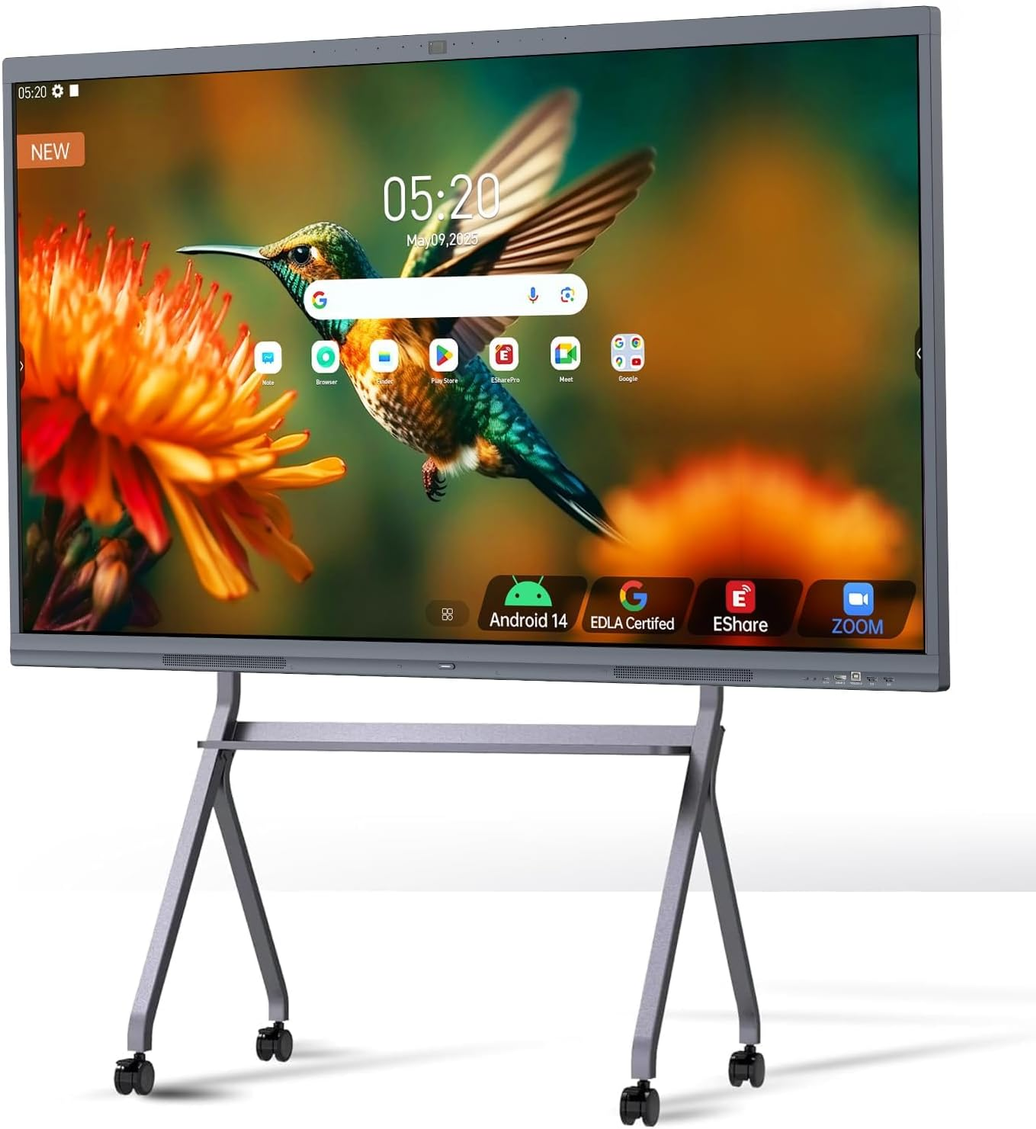
An interactive whiteboard (IWB) is a large, touch-enabled display system that allows users to interact directly with digital content using fingers, styluses, or specialized tools.
Unlike traditional whiteboards, interactive whiteboards combine:
· High-resolution display panels
· Touch-sensitive surfaces
· Embedded computing systems
· Collaboration software
This integration transforms the whiteboard into a digital collaboration hub, enabling real-time interaction, annotation, and communication.
Core Definition in a Sales Context
In business and industrial applications, an interactive whiteboard is not just a display—it is:
· A human-machine interface (HMI)
· A collaboration platform
· A data visualization tool
· A decision-making accelerator
Evolution of Whiteboards: From Analog to Intelligent Systems
Understanding interactive whiteboards requires looking at their evolution.
Stage 1 – Traditional Whiteboards
· Manual writing with markers
· No data storage
· Limited collaboration
Stage 2 – Digital Projectors
· Content projected onto screens
· Limited interactivity
· Dependent on external devices
Stage 3 – Early Interactive Whiteboards
· Basic touch capabilities
· Stylus-dependent input
· Limited software
Stage 4 – Modern Interactive Whiteboards
Today’s systems feature:
· Multi-touch interaction
· 4K/8K resolution
· Built-in operating systems
· Cloud collaboration
· Wireless connectivity
How Does an Interactive Whiteboard Work?
Interactive whiteboards rely on a combination of hardware and software technologies to deliver seamless interactivity.
Touch Detection Technology
The system detects user input through various touch technologies.
Infrared (IR) Touch Technology
· Uses infrared sensors around the screen edges
· Detects touch when beams are interrupted
Advantages:
· Cost-effective
· Works with fingers, gloves, or stylus
· Ideal for industrial environments
Capacitive Touch Technology
· Detects electrical conductivity of the human body
Advantages:
· High precision
· Smooth user experience
· Supports multi-touch gestures
Electromagnetic (EMR) Technology
· Uses a stylus with electromagnetic signals
Advantages:
· Extremely precise
· Ideal for design and engineering
Display Panel Technology
Interactive whiteboards typically use:
· LED panels
· LCD panels
· OLED (in premium models)
Key specifications include:
· Resolution (1080p, 4K, 8K)
· Brightness (nits)
· Viewing angle
Embedded Computing System
Modern IWBs include built-in processors and operating systems:
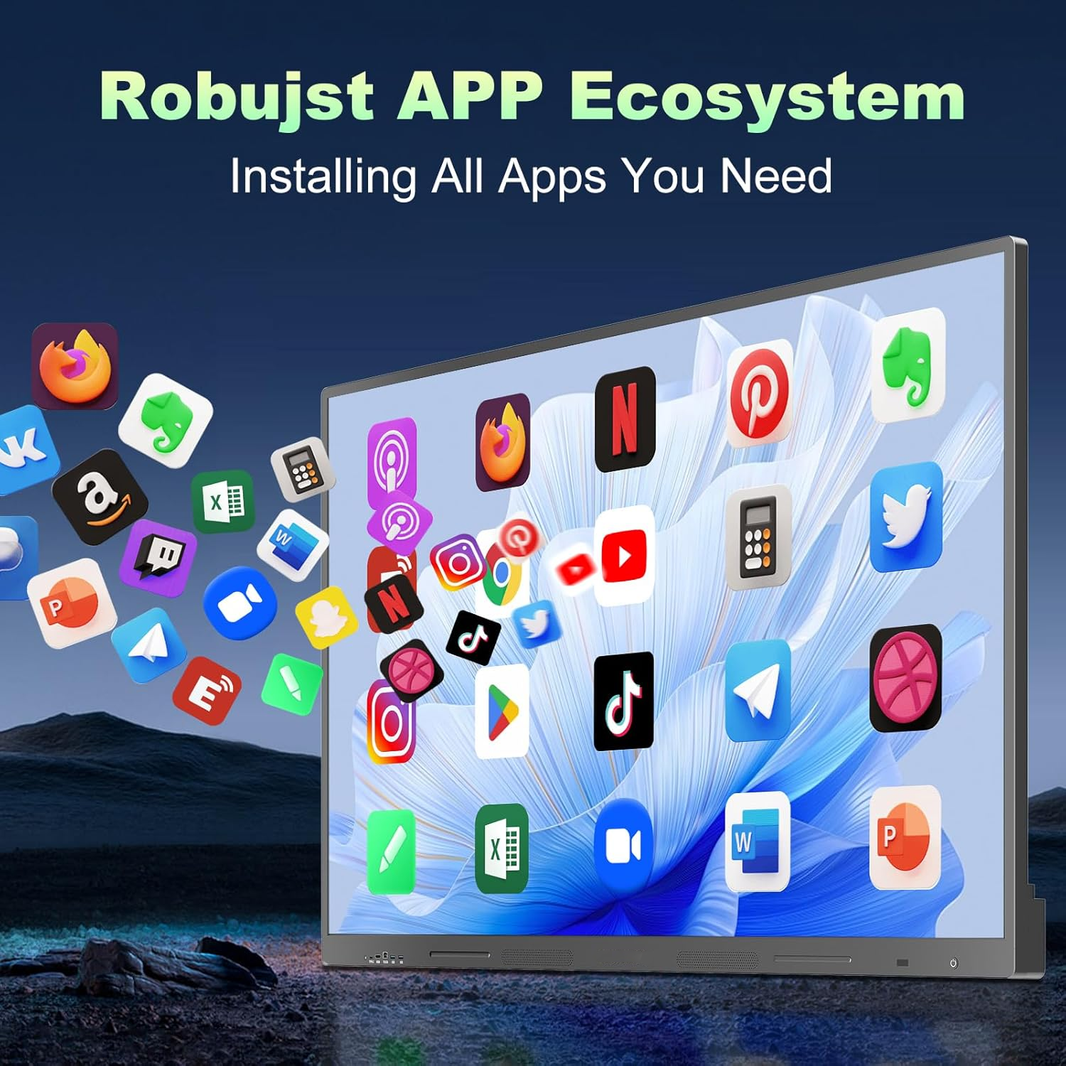
· Android OS (lightweight operations)
· Windows OS (enterprise applications)
· Linux (industrial control systems)
This allows the whiteboard to function independently without external PCs.
Software Layer
The software enables:
· Annotation tools
· Screen sharing
· File management
· Video conferencing
Connectivity Framework
Interactive whiteboards connect via:
· HDMI / USB
· Wi-Fi / Bluetooth
· LAN / RS232
Key Components of an Interactive Whiteboard
Understanding the hardware components helps buyers make informed decisions.
Display Panel
The visual output interface that determines clarity and user experience.
Touch Interface Layer
Responsible for detecting user input and translating it into commands.
Control System
Includes:
· CPU
· GPU
· Memory
· Storage
Audio-Visual System
· Built-in speakers
· Microphones
· Cameras (for conferencing)
Connectivity Ports
· HDMI
· USB
· Type-C
· Ethernet
Key Features of Interactive Whiteboards
Multi-User Collaboration
Multiple users can interact simultaneously, making it ideal for:
· Team meetings
· Training sessions
· Design reviews
Real-Time Annotation
Users can:
· Write notes
· Highlight content
· Save and share instantly
Wireless Screen Sharing
Participants can share screens from:
· Laptops
· Tablets
· Smartphones
Cloud Integration
Supports:
· Google Drive
· Microsoft OneDrive
· Cloud-based collaboration tools
Video Conferencing Integration
Compatible with:
· Zoom
· Microsoft Teams
· Google Meet
Benefits of Interactive Whiteboards in Business
Improved Collaboration Efficiency
Teams can collaborate in real time, regardless of location.
Faster Decision-Making
Visual data representation helps stakeholders make quicker decisions.
Reduced Operational Costs
Savings include:
· Travel costs
· Printing expenses
· Meeting time
Enhanced Training and Knowledge Sharing
Interactive learning improves retention and engagement.
Interactive Whiteboard vs Traditional Whiteboard
👉 Full comparison:Interactive Whiteboard vs Traditional Whiteboard
Key Differences
|
Feature |
Interactive Whiteboard |
Traditional Whiteboard |
|
Interactivity |
High |
None |
|
Data Storage |
Yes |
No |
|
Collaboration |
Remote + local |
Local only |
|
Multimedia Support |
Yes |
No |
Interactive Whiteboard vs Touchscreen Display
👉 Full comparison:Interactive Whiteboard vs Touchscreen Display
Key Differences
|
Feature |
Interactive Whiteboard |
Touchscreen Display |
|
Built-in Software |
Yes |
No |
|
Collaboration Tools |
Advanced |
Limited |
|
Use Case |
Meetings & collaboration |
Display only |
Common Use Cases
👉 Explore all industries:Interactive Whiteboard Use Cases by Industry
Corporate Meeting Rooms
· Brainstorming sessions
· Strategic planning
Industrial Control Rooms
· Real-time monitoring
· Data visualization
Training Centers
· Interactive instruction
· Simulation-based learning
How to Choose the Right Interactive Whiteboard
👉 Detailed guide:How to Choose an Interactive Whiteboard
Key Considerations
· Screen size
· Resolution
· Touch technology
· Connectivity
· Environment
Interactive Whiteboard Solutions for Businesses
👉 Explore solutions:Interactive Whiteboard Solutions for Business
Businesses often require:
· Customized hardware
· Software integration
· Industry-specific configurations
Common Misconceptions About Interactive Whiteboards
“They Are Only for Education”
Reality: Widely used in:
· Manufacturing
· Corporate environments
· Healthcare
“They Are Too Expensive”
Reality: ROI is achieved through:
· Efficiency gains
· Cost savings
“They Are Difficult to Use”
Reality: Modern systems are:
· User-friendly
· Plug-and-play
Future of Interactive Whiteboards
AI-Powered Collaboration
· Automated note-taking
· Smart recommendations
Integration with Industry 4.0
· Smart factories
· IoT ecosystems
H3: Remote Work Enablement
· Hybrid collaboration
· Global team integration
Conclusion
Interactive whiteboards are no longer optional tools—they are core infrastructure for modern collaboration and industrial operations.
They combine:
· Hardware
· Software
· Connectivity
Into a single, powerful platform that enhances productivity, communication, and decision-making.
Leave a comment