Which Is Better for Small Businesses?
Our current small business users often face a critical architectural decision when upgrading their meeting rooms:
Should we choose an all-in-one digital whiteboard, or build a modular AV system with separate components?
On paper, both approaches can support meetings. In practice, they deliver very different cost structures, reliability levels, and user experiences.
This guide compares all-in-one digital whiteboards vs modular AV systems, helping small businesses choose the right collaboration foundation.
What Is an All-in-One Digital Whiteboard?
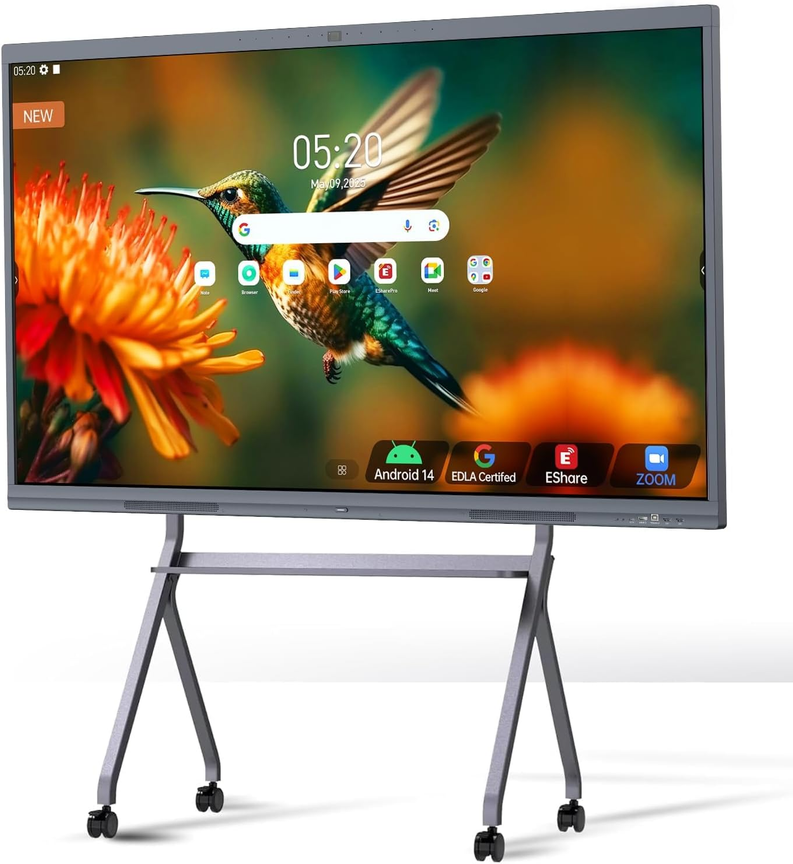
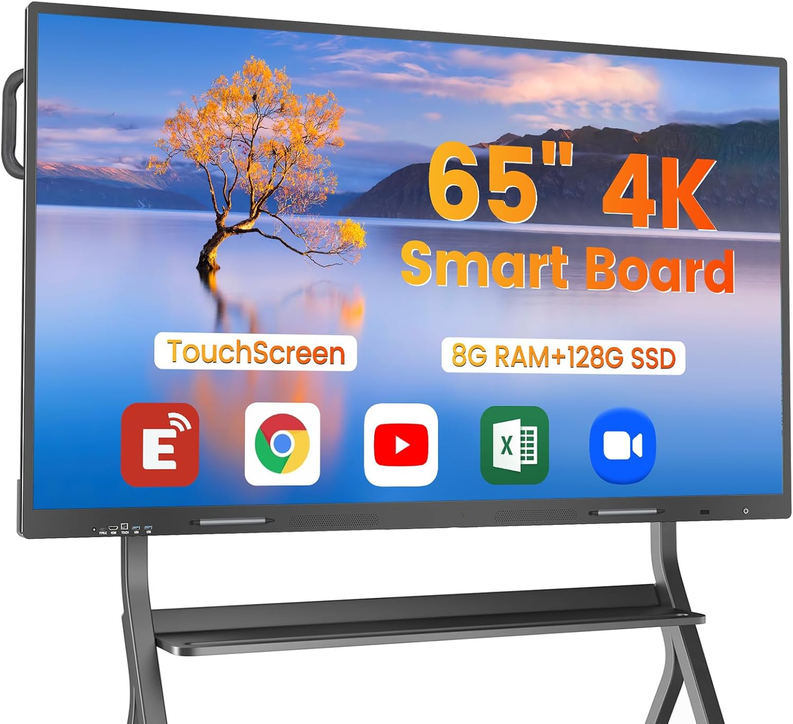
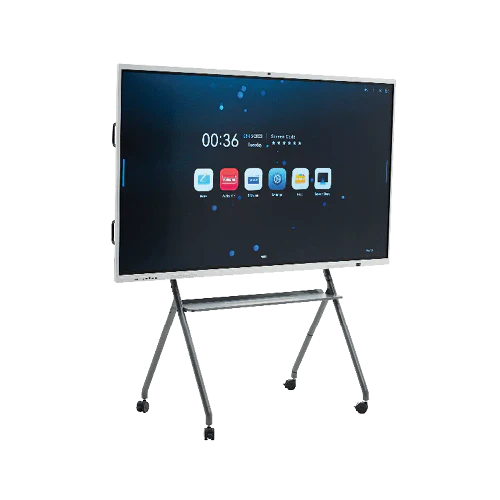
An all-in-one digital whiteboard integrates everything required for collaboration into a single commercial-grade device.
Integrated Components
- 4K interactive touch display
- Embedded Android OS
- Optional Windows OPS computer
- Whiteboard & collaboration software
- Camera, microphone array, speakers
- Wireless casting & conferencing apps
The result is a ready-to-use collaboration system designed for daily business use.
This architecture underpins the
best digital whiteboard for small business.
What Is a Modular AV System?
A modular AV system assembles separate components, typically including:
- Display or projector
- External PC or mini-PC
- Webcam
- Microphone & speakers
- Whiteboard software
- AV control cables and mounts
While modular systems offer flexibility, they introduce complexity and risk—especially for small teams without dedicated IT staff.
Comparison Table
|
Factor |
Modular AV System |
All-in-One Digital Whiteboard |
|
Initial setup |
Complex |
Plug-and-play |
|
Number of devices |
5–8 |
1 |
|
Touch & annotation |
Inconsistent |
Optimized |
|
Zoom & Teams integration |
External PC |
Native |
|
Maintenance points |
Many |
Minimal |
|
Daily reliability |
Variable |
High |
|
Total cost of ownership |
Often higher |
Predictable |
Modular systems optimize flexibility.
All-in-one whiteboards optimize reliability and usability.
Why Modular Systems Often Fail Small Businesses
From real-world deployment feedback, modular AV setups commonly suffer from:
- Cable failures and loose connections
- Driver and OS update conflicts
- Audio/video synchronization issues
- User confusion during meetings
These problems reduce adoption and increase hidden IT costs.
This is especially problematic for teams focused on
digital whiteboard for small business collaboration
where ease of use is critical.
All-in-One Whiteboards: Designed for Daily Use
All-in-one digital whiteboards are engineered as commercial systems, not assembled solutions.
Key Design Advantages
- Fanless thermal architecture
- Touch firmware optimized for handwriting
- Unified update & lifecycle management
- Consistent user experience across rooms
This matters for businesses that rely on whiteboards for:
brainstorming and project planning
or employee training sessions.
Cost Comparison: Short-Term vs Long-Term
Modular AV System Costs
- Lower perceived entry cost
- Multiple vendor warranties
- Higher installation labor
- Frequent troubleshooting
All-in-One Digital Whiteboard Costs
- Higher upfront hardware price
- Single vendor responsibility
- Lower maintenance cost
- Longer usable lifespan
Over 3–5 years, all-in-one systems typically deliver lower total cost of ownership (TCO).
Scalability & Standardization
Small businesses often grow into:
- Multiple meeting rooms
- Hybrid team structures
- Standardized IT environments
All-in-one digital whiteboards enable:
- Consistent UI across rooms
- Easier user training
- Simplified device management
This scalability is harder to achieve with modular systems.
Zoom & Microsoft Teams Performance
All-in-one systems excel in:
- One-touch meeting join
- Native app performance
- Real-time annotation sync
For hybrid teams, this directly supports:
digital whiteboard compatible with Zoom and Microsoft Teams
Manufacturer View on System Architecture
As a digital whiteboard manufacturer, we design all-in-one systems to:
- Reduce failure points
- Support long-term OS roadmaps
- Pass continuous operation testing
- Remain stable under touch + video workloads
We validate systems as complete platforms, not as individual components.
FAQ: All-in-One vs Modular
Is modular AV cheaper?
Initially, sometimes. Over time, maintenance and integration costs often exceed all-in-one systems.
Can modular systems offer the same features?
Functionally, yes—but with more complexity and less reliability.
Which is better for non-technical teams?
All-in-one digital whiteboards are far easier to deploy and use.
Are all-in-one systems less flexible?
They are standardized by design, which improves reliability while still supporting app expansion.
Final Recommendation
For small businesses prioritizing:
- Reliability
- Ease of use
- Hybrid collaboration
- Predictable long-term costs
An all-in-one digital whiteboard is the superior choice over modular AV systems.